Chapter 5 of 72 in Hà Nội: Renowned Historic Buddhist Temples · pages 68–79
Bối Khê Temple
Đại Bi Temple
Chùa Bối Khê
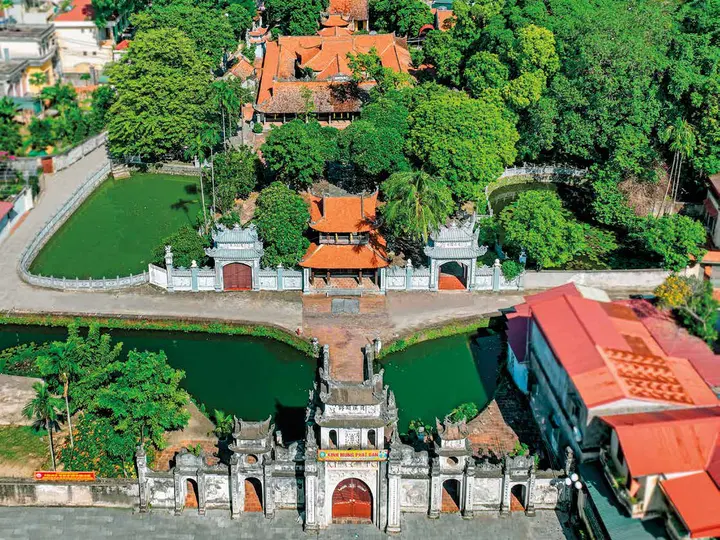
One of the largest and earliest temples in the Red River Delta, with Lý-era traces and a Trần stone altar. It is tied to the legend of Saint Patriarch Nguyễn Nữ and became a Special National Monument in 2025.
Key facts
- Address
- Tam Hưng Commune (approximate location) · Show on the map
- Founded
- Founded in the Lý dynasty (11th century) (according to tradition)
- Heritage status
- Special National Monument (17 January 2025); national-level since 1979
- Lineage
- Tào Động (Caodong)
- Book pages
- 68–79
Highlights
- Carved stone with a horned dragon, typical of Lý art
- Trần-era lotus stone altar in the Upper Hall
- Eleven steles from early Lê to Nguyễn and 19 royal decrees
Milestones
- 1453 Main hermitage, burned under the Hồ and Ming, was rebuilt
- 1603 Tam Quan gate repaired, per the Tam Quan stele
- 1629 The whole frame of the Front Hall was replaced
- 1908 Great bronze bell cast
- 1979 Ranked a national Architectural-Artistic Site
- 2025 Prime Minister designated it a Special National Monument
From the book
Bối Khê Temple, formally known as Đại Bi Temple, is located in Tam Hưng Commune, Hà Nội. It is one of the largest and earliest surviving ancient temples in the Red River Delta region.
Frequently asked questions
Where is Bối Khê Temple?
Bối Khê Temple is located at Tam Hưng Commune, Hà Nội, Vietnam.
When was Bối Khê Temple founded?
Founded in the Lý dynasty (11th century) (according to tradition)
Is Bối Khê Temple a ranked heritage site?
Special National Monument (17 January 2025); national-level since 1979
Which Zen lineage is Bối Khê Temple associated with?
According to the book, the temple is associated with the Tào Động (Caodong) tradition.
What is the formal name of Bối Khê Temple?
Its formal (literary) name is Đại Bi Temple.