Hà Nội: Renowned Historic Buddhist Temples
A bilingual Vietnamese – English digital edition of Hà Nội: Renowned Historic Buddhist Temples (revised and expanded edition) by Most Venerable Thích Bảo Nghiêm, with photographs by Võ Văn Tường, published by Hồng Đức Publishing House. The book presents 72 representative temples out of the 1,917 Buddhist establishments in Hà Nội: their history and artifacts, generations of abbots, and heritage status.
41 of the 72 temples are officially recognised historical, cultural or architectural monuments; six are Special National Heritage Sites: Bối Khê, Đậu, Thầy, Hương, Tây Phương and Kiến Sơ (Phù Đổng complex).
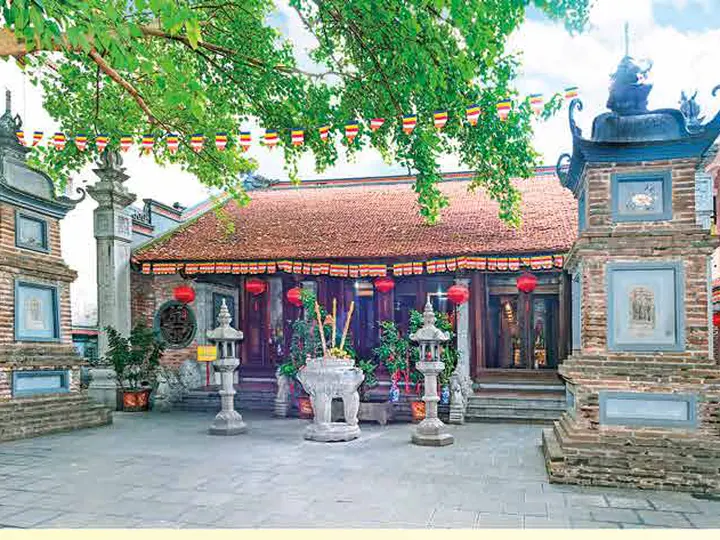 1. Bà Đá TempleLinh Quang TempleHoàn Kiếm Ward · City-level Heritage SiteA major ancestral temple of the Lâm Tế Zen school in northern Vietnam, founded around the Hồng Đức reign near a stone statue unearthed there. It received President Hồ Chí Minh in 1946 and now houses the Hà Nội Buddhist Association.
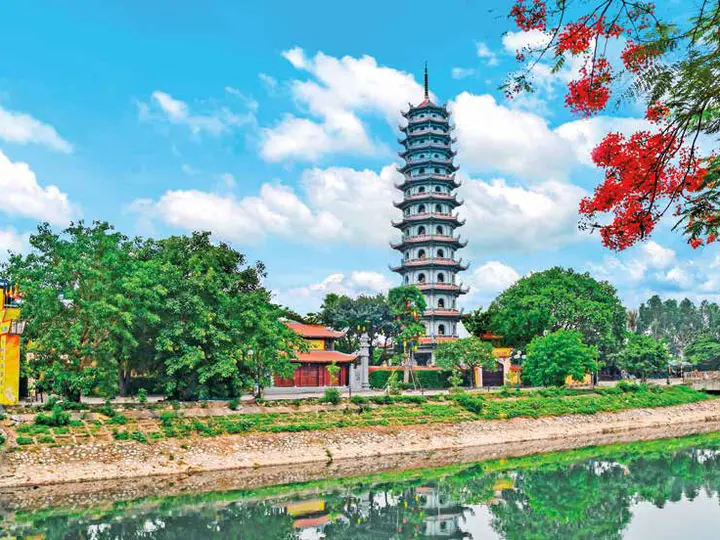 2. Bằng TempleLinh Tiên TempleHoàng Liệt Ward · Heritage status not stated in the bookKnown by its Sino-Vietnamese name Linh Tiên Temple, it keeps a stele from 1617 and the largest bell in the area. Its lineage passed from Lâm Tế - Tam Huyền to Tào Động; the Báo Ân Tower holds two Vietnamese records.
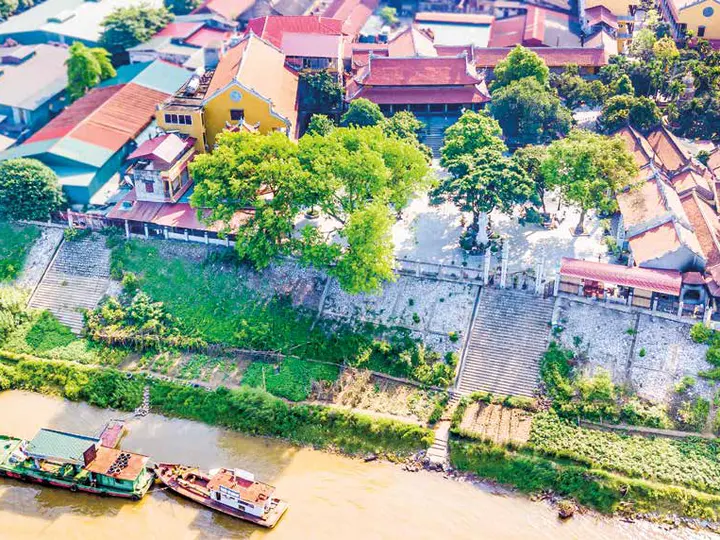 3. Bồ Đề TempleThiên Sơn Cổ Tích TempleBồ Đề Ward · Heritage status not stated in the bookBeside the Red River and tied to the Lam Sơn rebels' headquarters of the 15th century. Patriarch Nguyên Biểu restored it in 1874 and carved the Avatamsaka woodblocks; it later hosted a nuns' school and still hosts summer retreats.
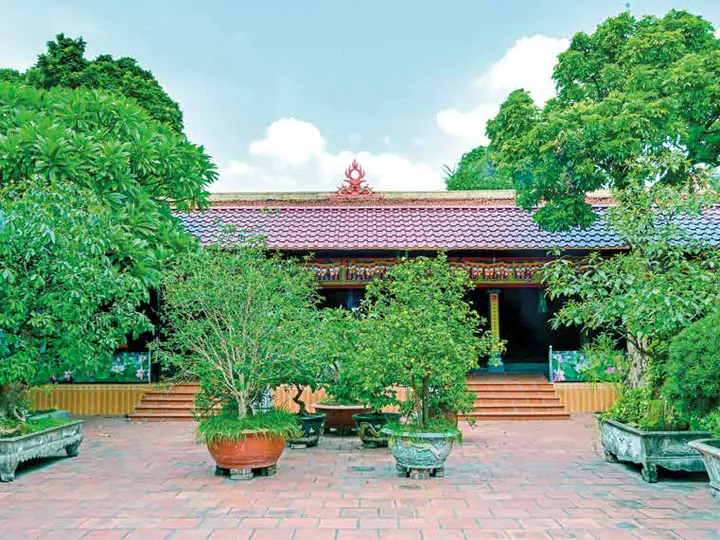 4. Bộc TempleSùng Phúc Temple - Thiên Phúc TempleKim Liên Ward · National Heritage SiteLocated in the Khương Thượng - Đống Đa battlefield of 1789, the temple was destroyed and rebuilt in 1791. Its Đức Ông statue is said to portray Emperor Quang Trung, worshipped discreetly by villagers.
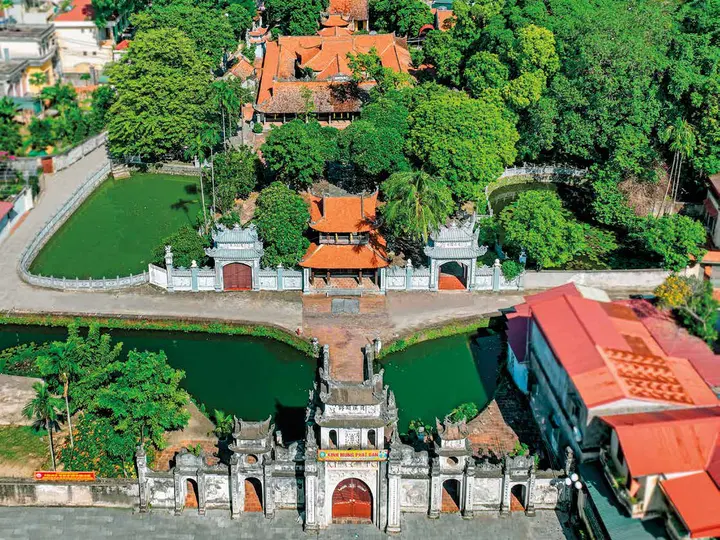 5. Bối Khê TempleĐại Bi TempleTam Hưng Commune · Special National Heritage SiteOne of the largest and earliest temples in the Red River Delta, with Lý-era traces and a Trần stone altar. It is tied to the legend of Saint Patriarch Nguyễn Nữ and became a Special National Monument in 2025.
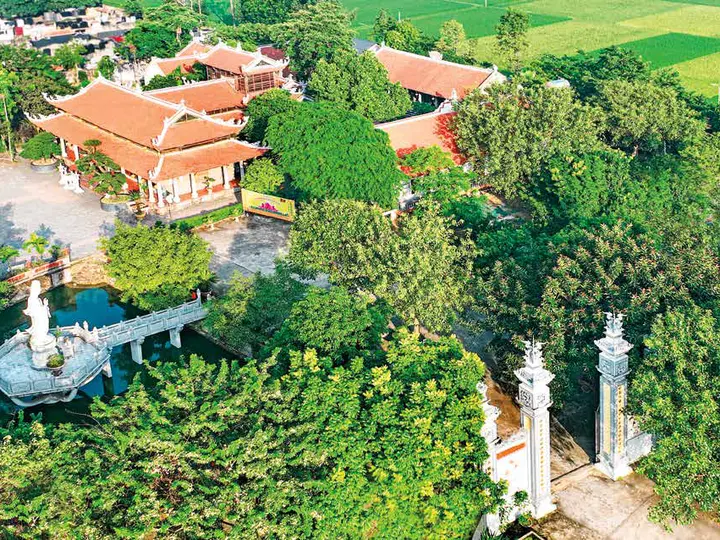 6. Bụt Mọc TempleQuang Linh HermitageThư Lâm Commune · Heritage status not stated in the bookA temple on a small hill amid fields, tied to the Stone Hermitage of Emerging Buddhas and the legend of the deity Niệm Hưng, born beside it. Razed in 1947 under the scorched-earth policy, it was rebuilt from 2005.
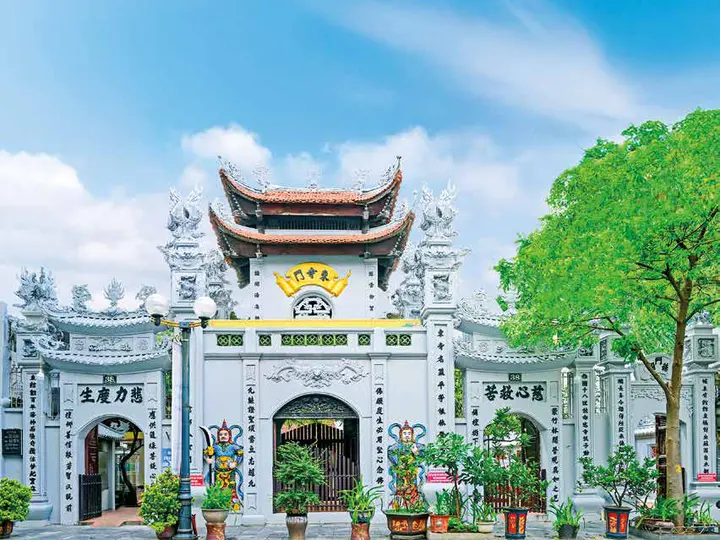 7. Cầu Đông TempleĐông Môn TempleHoàn Kiếm Ward · Heritage status not stated in the bookAn Old Quarter temple linked to Cầu Đông Bridge, its market and the tale of Tú Uyên and Giáng Kiều. It is the only temple in Hà Nội with statues of Trần Thủ Độ and Lady Trần Thị Dung, and helps locate the Citadel's east side.
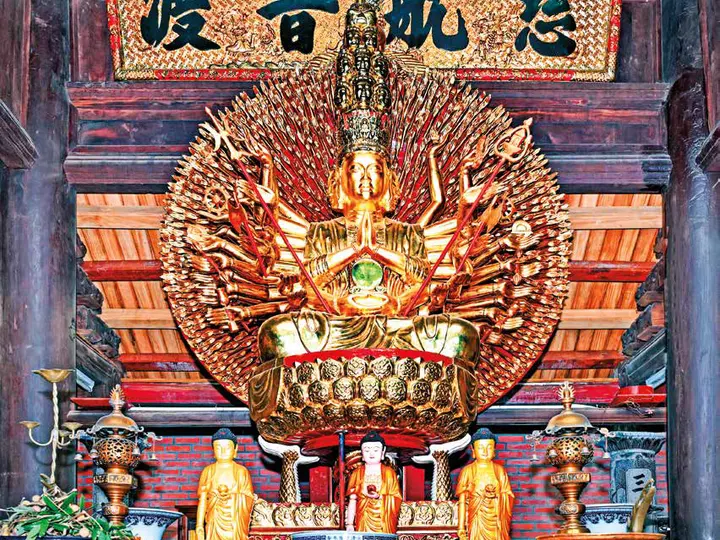 8. Chân Tiên TempleHai Bà Trưng Ward · National Heritage SiteThe temple of Phụ Khánh village, moved three times for the Lord's palace and French urban planning. Its present Bà Triệu site dates from 1897–1901; it keeps 237 scripture blocks and a unique wood carving of the Five Tigers.
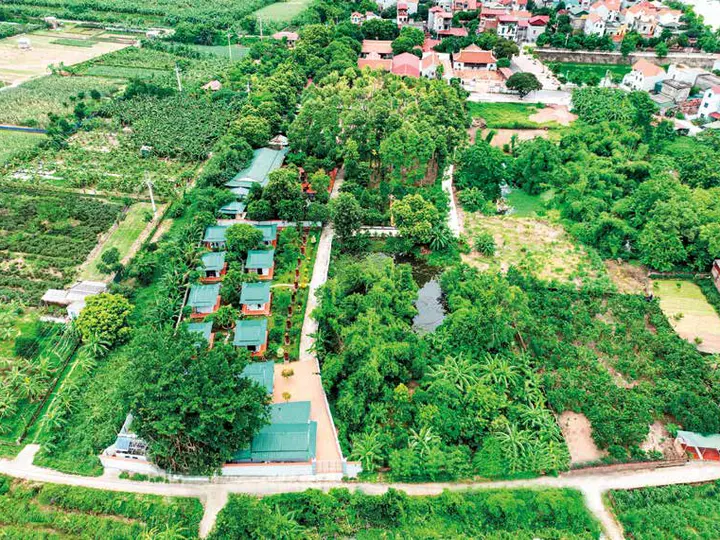 9. Chi Đông TemplePhúc Long TempleQuang Minh Commune · National Heritage SiteAdjoining Chi Đông Shrine, it forms the Chi Đông Shrine-Temple complex. The main hall has a Đinh-shaped plan and a three-tier, eight-roof layout, and the temple keeps 13 statues and 10 steles.
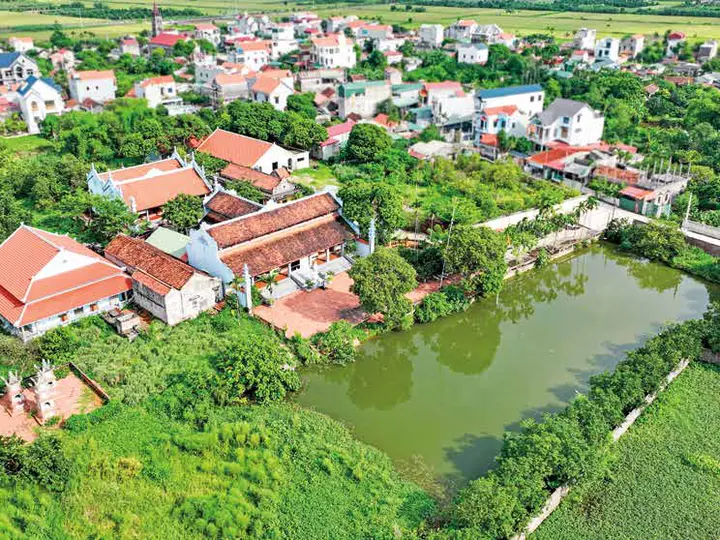 10. Đa Bảo TempleĐại Xuyên Commune · Heritage status not stated in the bookOne of the three great monastic lineages of old Thường Tín, as the folk rhyme says: first Đọi, second Đa, third Khê Hồi. The temple keeps about 800 scripture woodblocks and was bombed flat by the French in 1953.
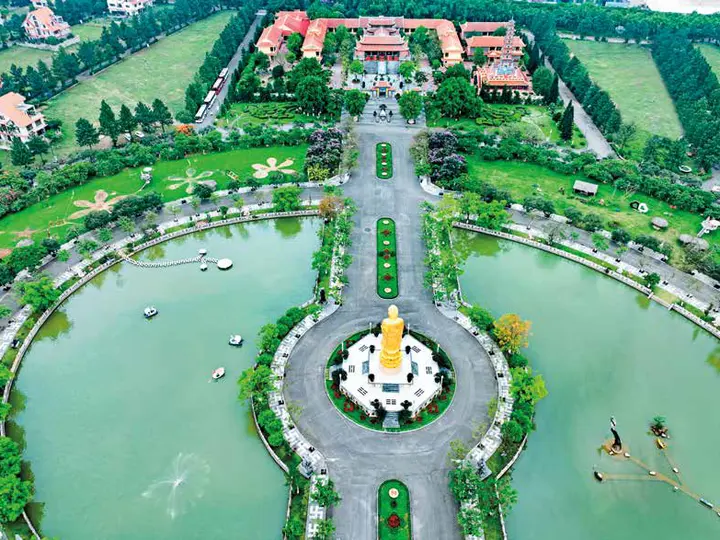 11. Đại Từ Ân TempleĐan Phượng Commune · Heritage status not stated in the bookA newly built temple named in 2008 by Supreme Patriarch Thích Phổ Tuệ and begun for the Thăng Long millennium. It houses the Vietnam Buddhist Documentation Center and the Hà Nội Buddhist Intermediate School.
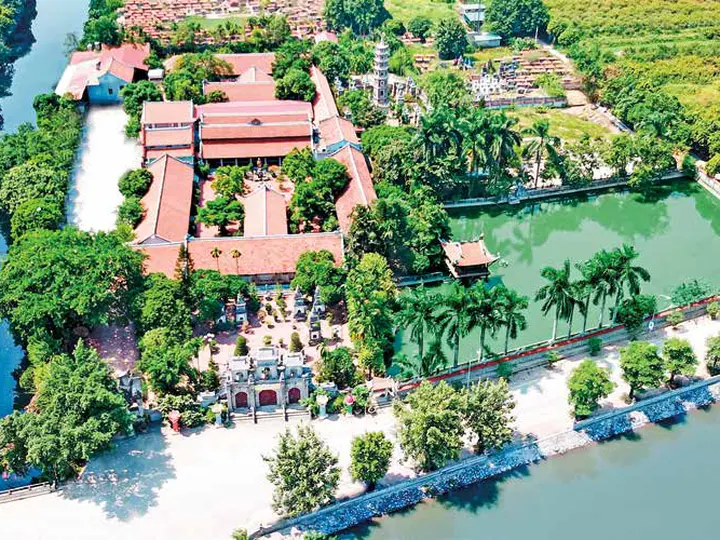 12. Đào Xuyên TempleThánh Ân TempleBát Tràng Commune · National Heritage SiteA major ancestral temple of the second branch of the Lâm Tế school of Linh Quang - Bà Đá. It holds a 16th-century Thousand-Armed Quan Âm statue, a National Treasure, and once sheltered revolutionary cadres.
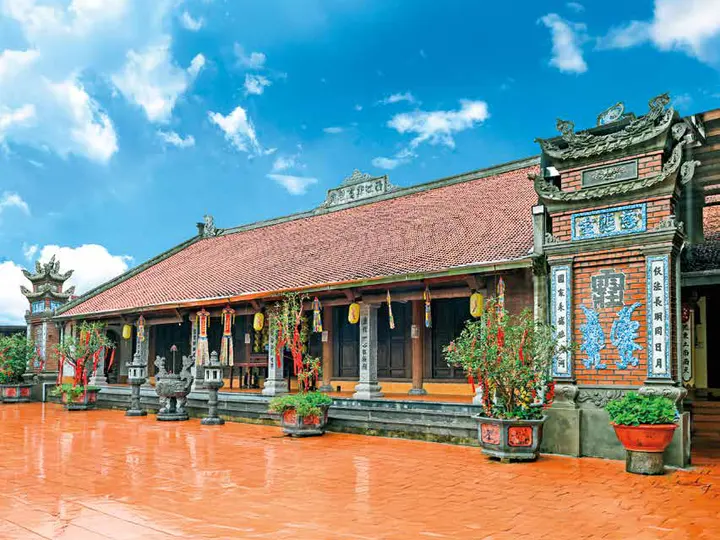 13. Đăm TempleHưng Khánh TempleTây Tựu Ward · National Heritage SiteAn old temple first named Bảo Sở, later Hưng Khánh, belonging to the Đào Xuyên lineage. Steles of 1541 and 1590 record restorations; in the anti-French war it was a revolutionary base, and Patriarch Tâm Tiến was posthumously named a martyr.
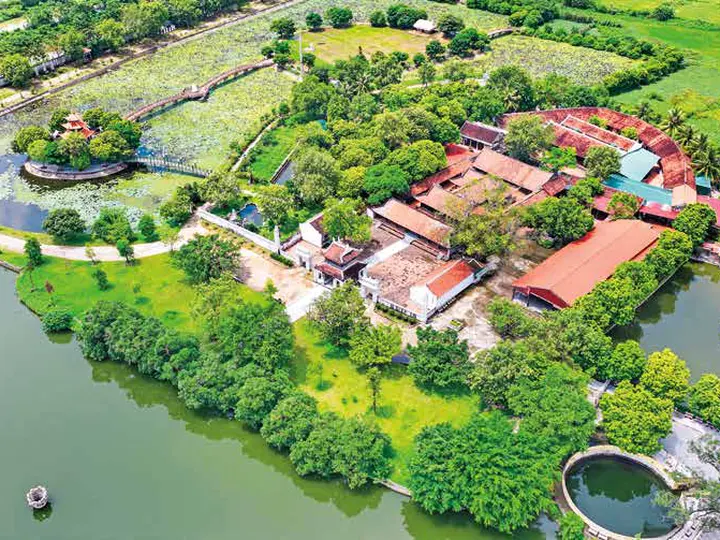 14. Đậu TempleThành Đạo TempleThượng Phúc Commune · Special National Heritage SiteDedicated to the goddess Pháp Vũ of the Four Dharma cult, said to date from Sĩ Vương in the 2nd century. It keeps over 50 statues, Trần-era stone dragons and the naturally preserved bodies of two Vũ Zen masters.
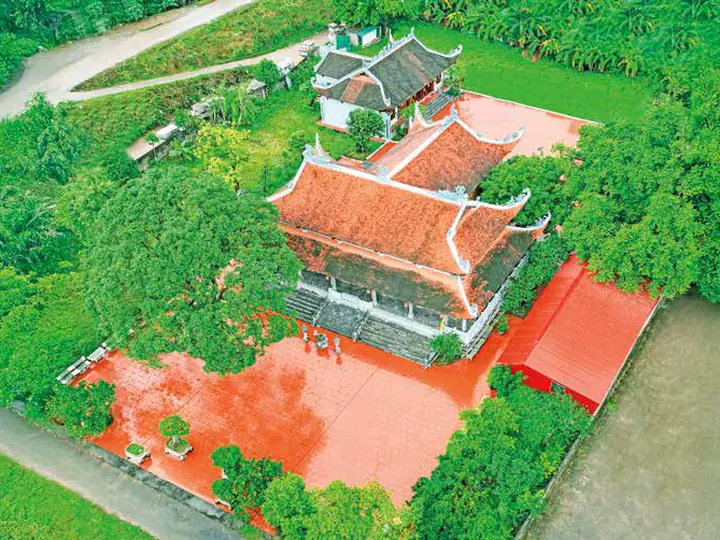 15. Đôn Thư TempleThắng Quang TempleThanh Oai Commune · Heritage status not stated in the bookAn old Later Lê temple by the Đáy River dyke, known for villagers hiding its bell in the lotus pond and moving the temple into the village. The Central Military Commission met here in 1968; Ven. Thích Di Sơn became abbot in 2025.
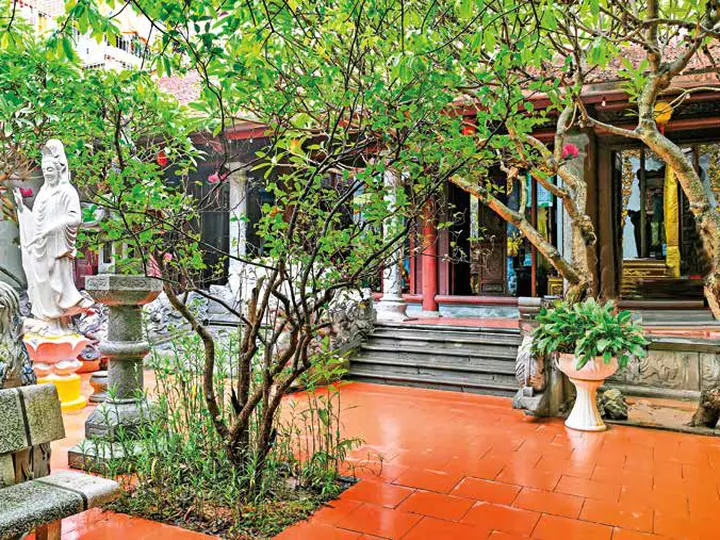 16. Đồng Quang TempleKim Liên Ward · National Heritage SiteBuilt on the battlefield of the Tây Sơn and Qing armies, it began as a hall for honoring the fallen. With Bộc Temple and Đống Đa Mound it forms a heritage cluster; its festival is held on the fifth day of the first lunar month.
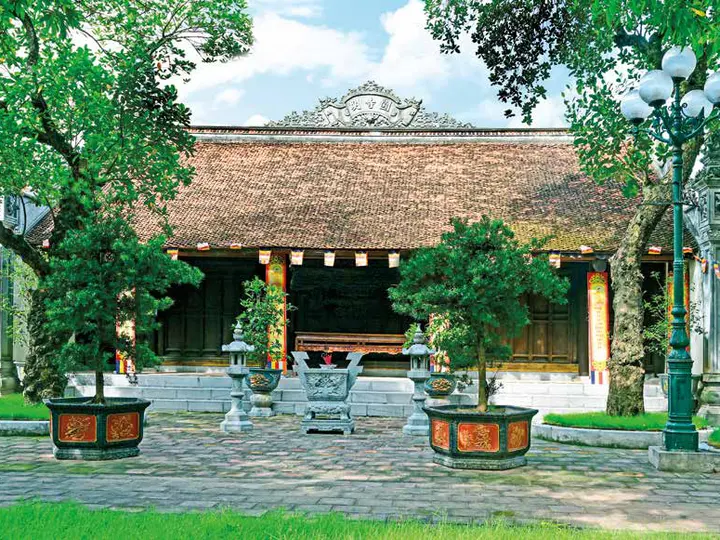 17. Hai Bà Trưng TempleViên Minh TempleHai Bà Trưng Ward · National Heritage SiteViên Minh Temple stands with Đồng Nhân communal house and the Trưng Sisters Shrine; its name comes from the Sisters' Buddhist title in a 1533 decree. Led by generations of nuns, it hosted resistance meetings against the French.
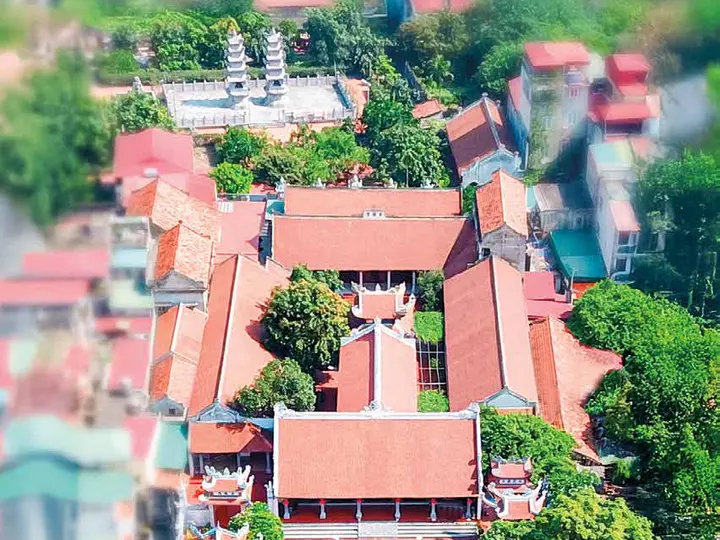 18. Hoàng Mai TempleNga My TempleTương Mai Ward · National Heritage SiteNga My Temple is tied to the estate of General Trần Khát Chân, and a 1497 stele says it was already famed in the Lý era. Run by nuns since 1916, it was almost wholly destroyed by American bombs in 1972.
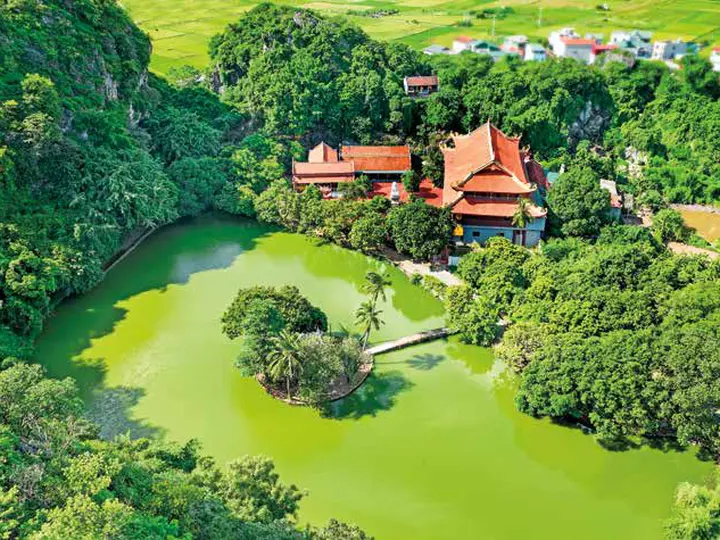 19. Hoàng Xá CaveHoa Vân TempleQuốc Oai Commune · Special National Heritage SiteHoa Vân Temple and Hoàng Xá Cave, part of the Thầy Temple complex, are a revolutionary landmark where the Government Council met in 1947 and the national treasury was stored in 1972.
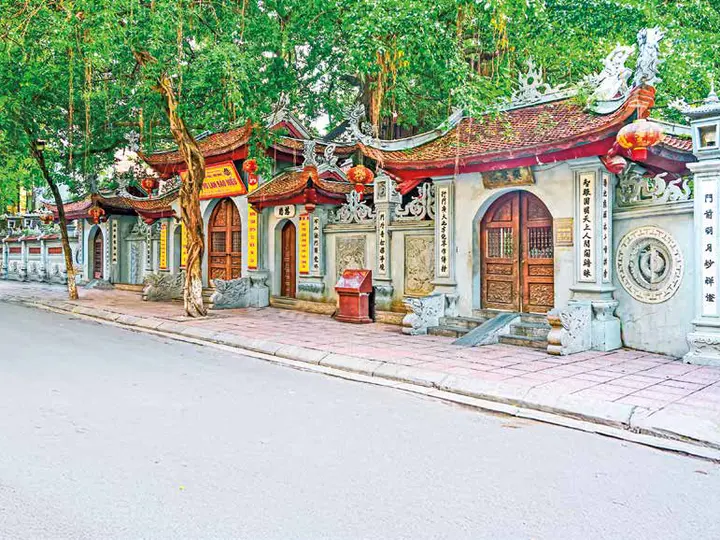 20. Hòe Nhai TempleHồng Phúc TempleBa Đình Ward · National Heritage SiteHòe Nhai Temple is the ancient patriarchal temple of the Tào Động Zen school in northern Vietnam, tied to Master Tông Diễn and King Lê Hy Tông, and holds a unique statue of the repentant king.
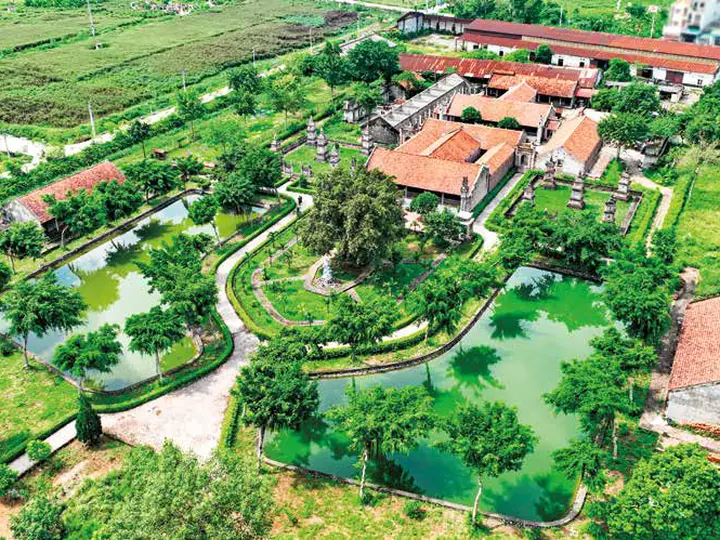 21. Hội Xá TempleSùng Phúc TempleChương Dương Commune · Heritage status not stated in the bookHội Xá Temple is a notable ancient temple of northern Buddhism, distinguished by a layout of three linked Quốc characters and a lineage of at least 14 successive abbots.
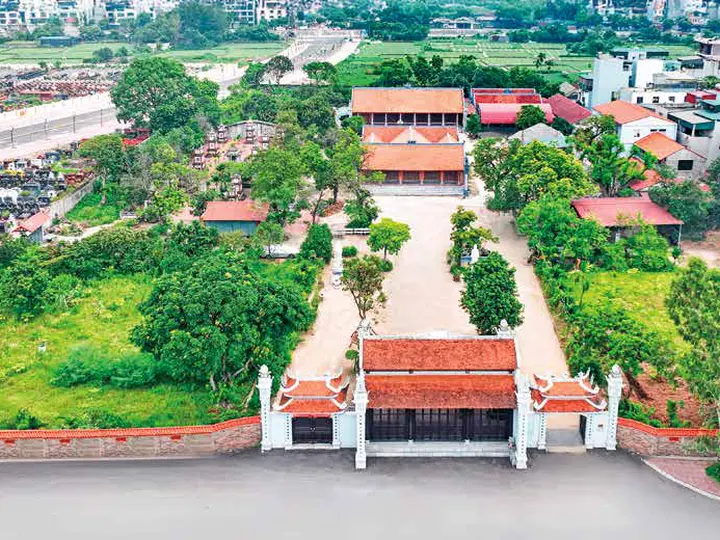 22. Huỳnh Cung TempleSùng Phúc TempleĐại Thanh Commune · National Heritage SiteHuỳnh Cung Temple is the final resting place of the Hà Nội Buddhist Association's monks and nuns, with 11 stupas initiated by Most Venerable Thích Đức Nhuận in 1980, near where Chu Văn An taught.
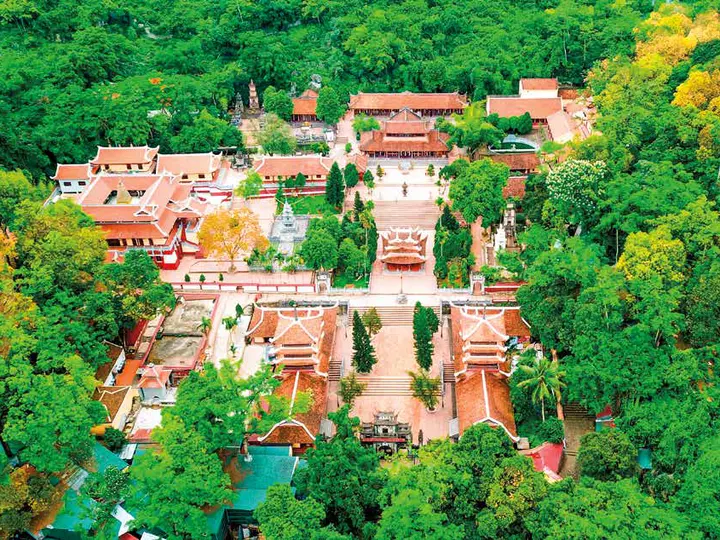 23. Hương TempleThiên Trù TempleHương Sơn Commune · Special National Heritage SiteHương Temple is a complex of 18 shrines, temples and caves centered on Thiên Trù Temple and Hương Tích Cave, hosting the country's longest festival and blending several religious traditions.
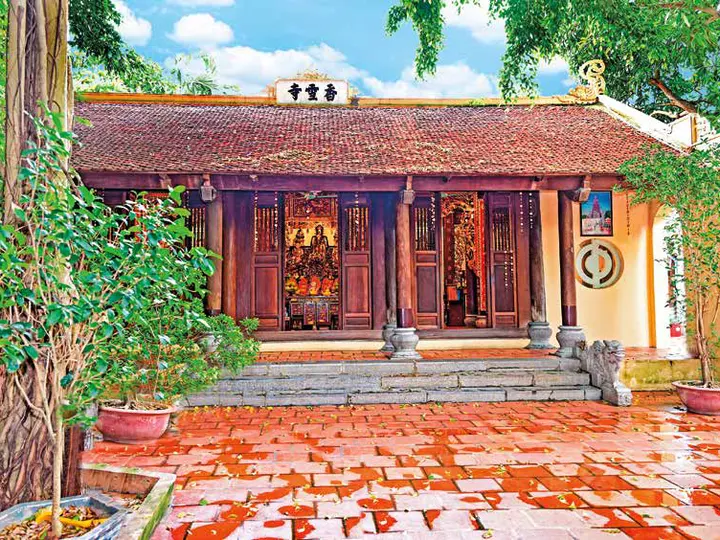 24. Hương Tuyết TempleBạch Mai Ward · National Heritage SiteHương Tuyết Temple is a revolutionary site: a contact point for the Revolutionary Youth League in 1929 and headquarters of the strike committee at the Aviat workshop.
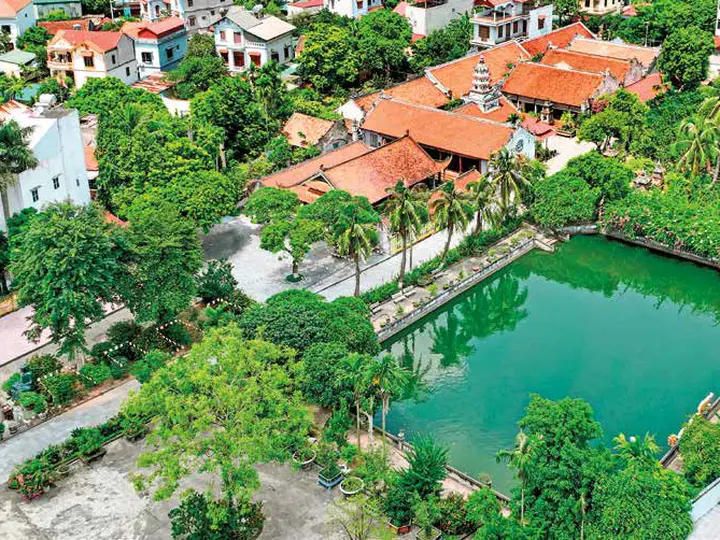 25. Keo TempleBáo Ân Trùng Nghiêm TempleThuận An Commune · National Heritage SiteKeo Temple venerates Pháp Vân, one of the Four Dharma Deities, serving as the shared temple of Giao Tự and Giao Tất villages, with Later Lê statues, many steles and the Keo festival.
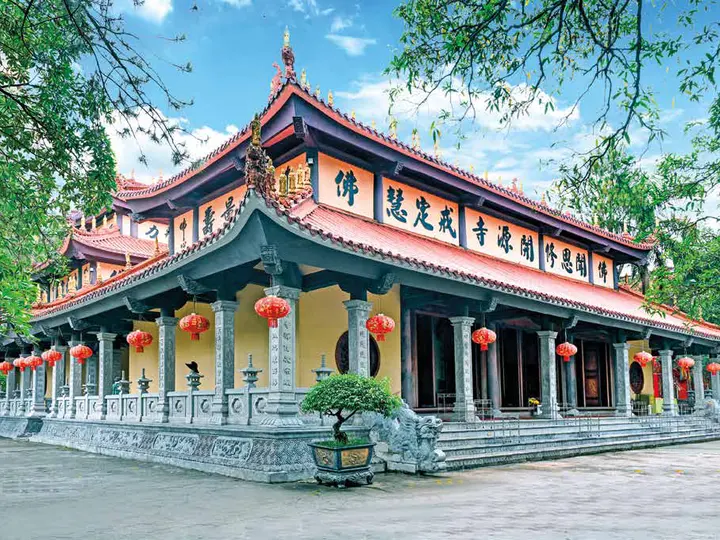 26. Khai Nguyên TempleCổ Liêu TempleĐoài Phương Commune · Heritage status not stated in the bookKhai Nguyên Temple, once nearly a ruin, was revived from 2003 under Ven. Thích Đạo Thịnh and is now known for its 72-meter Amitabha Buddha statue.
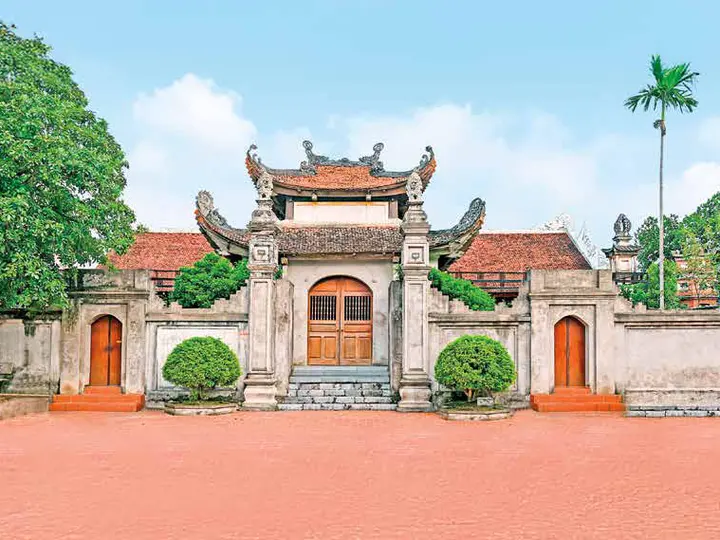 27. Khê Hồi TempleHoa Lâm TempleHồng Vân Commune · National Heritage SiteKhê Hồi Temple (Hoa Lâm) is a major patriarchal temple of the northern Lâm Tế Zen school, now the annual summer retreat site of Hà Nội Buddhism, holding about 700 sutra printing blocks.
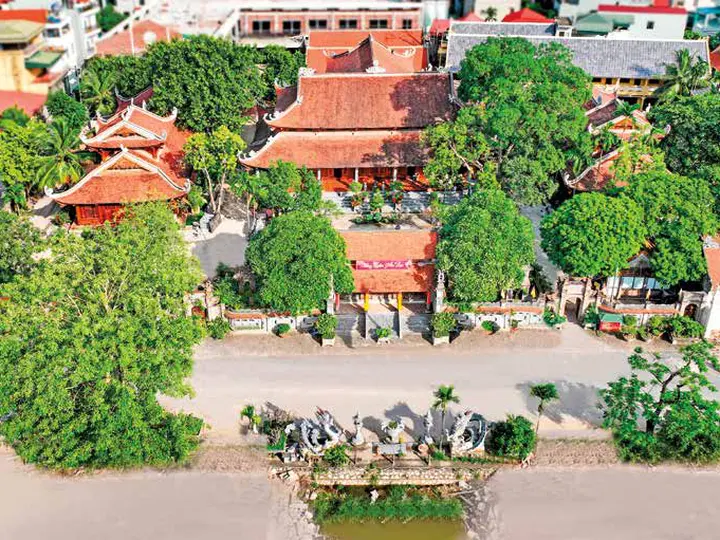 28. Khoan Tế TempleCự Đà TempleBát Tràng Commune · National Heritage SiteKhoan Tế Temple (Cự Đà) dates from the Lý-Trần period by legend, with its oldest stele from 1634; its Three Jewels Hall burned in 2020 and was promptly rebuilt.
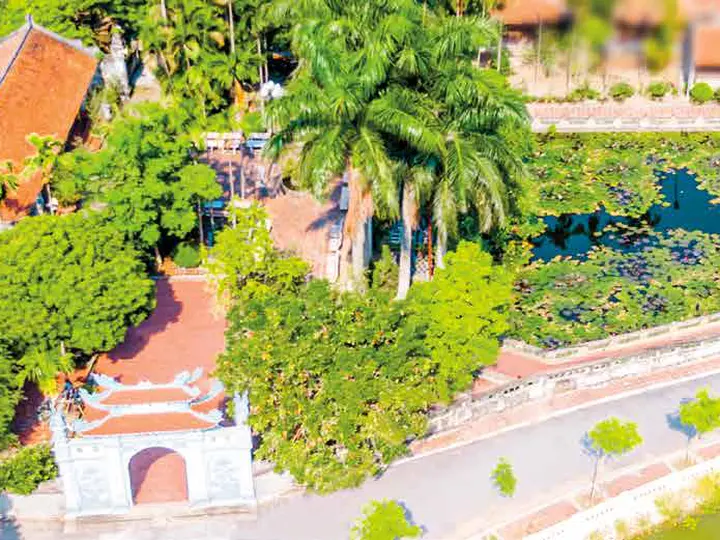 29. Kiến Sơ TemplePhù Đổng Commune · Special National Heritage SiteKiến Sơ Temple was the first center of the Vô Ngôn Thông Zen school, linked to Master Vô Ngôn Thông and Lý Công Uẩn; its worth lies chiefly in history rather than architecture.
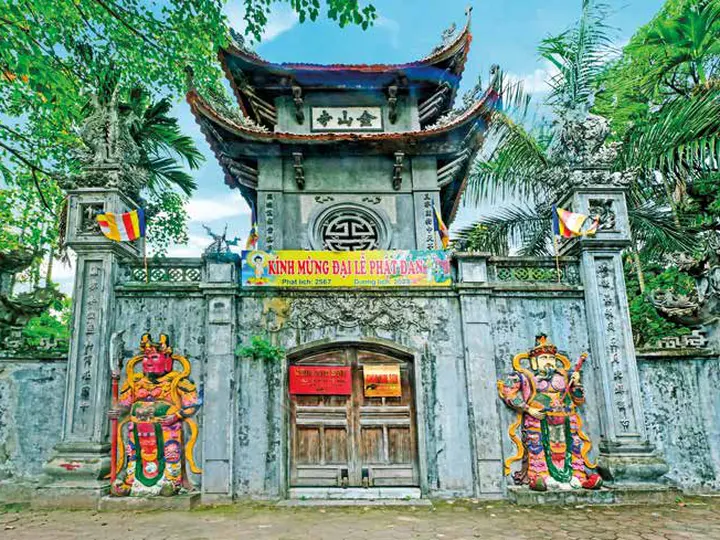 30. Kim Mã TempleKim Sơn Altar TempleGiảng Võ Ward · National Heritage SiteKim Mã Temple (Kim Sơn) stands on a former execution ground and cemetery, with the Vạn Linh altar and a three-unit layout forming the character Sơn, rare among Vietnamese temples.
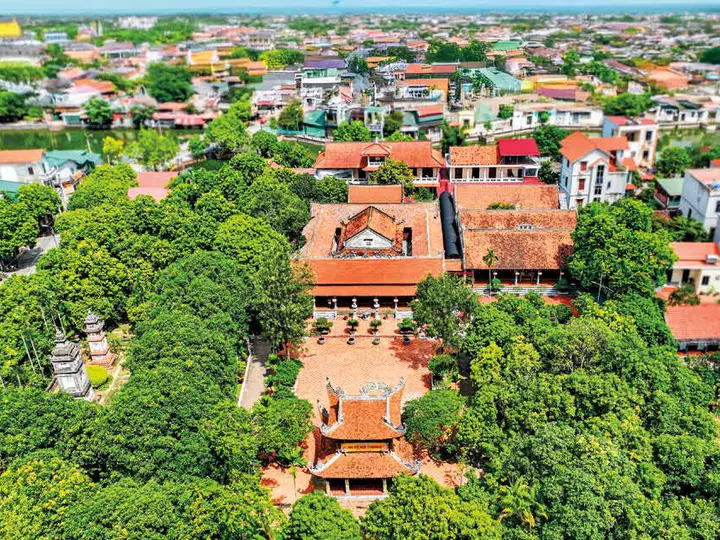 31. Lại Yên TempleNhạ Phúc TempleSơn Đồng Commune · National Heritage SiteLại Yên Temple (Nhạ Phúc) was founded in the Trần era by Consort Thắng Đức, its first abbess; it now covers over 11,000 m² and keeps 40 statues and 37 Lê-Nguyễn steles.
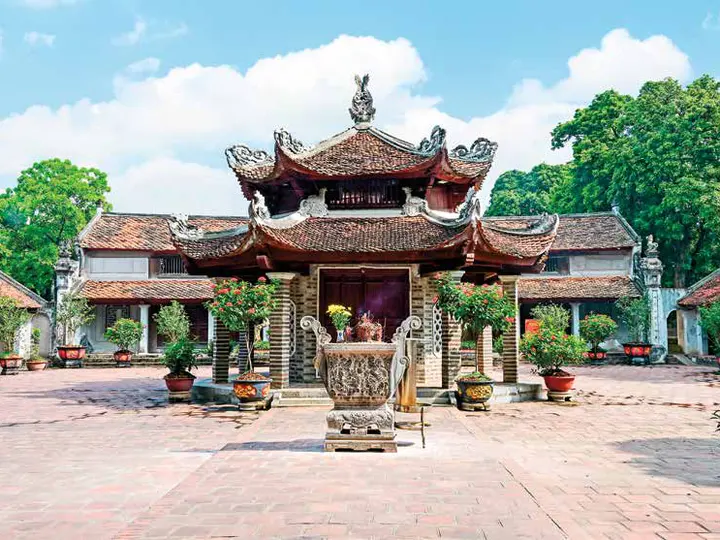 32. Láng TempleChiêu Thiền TempleLáng Thượng Ward · National Heritage SiteLáng Temple (Chiêu Thiền) venerates Zen Master Từ Đạo Hạnh, the previous incarnation of Emperor Lý Thần Tông; it holds 198 statues and a festival recognized as national intangible heritage.
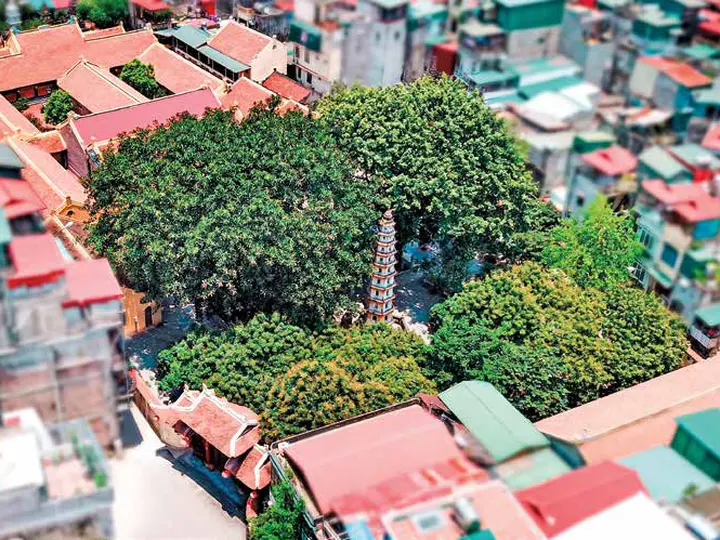 33. Liên Phái TempleLiên Tông TempleHai Bà Trưng Ward · National Heritage SiteLiên Phái Temple was founded when Master Như Trừng Lân Giác, a former royal son-in-law, converted his residence; it is Hà Nội's first Lâm Tế patriarchal temple, with 60+ steles and 1,528 woodblocks.
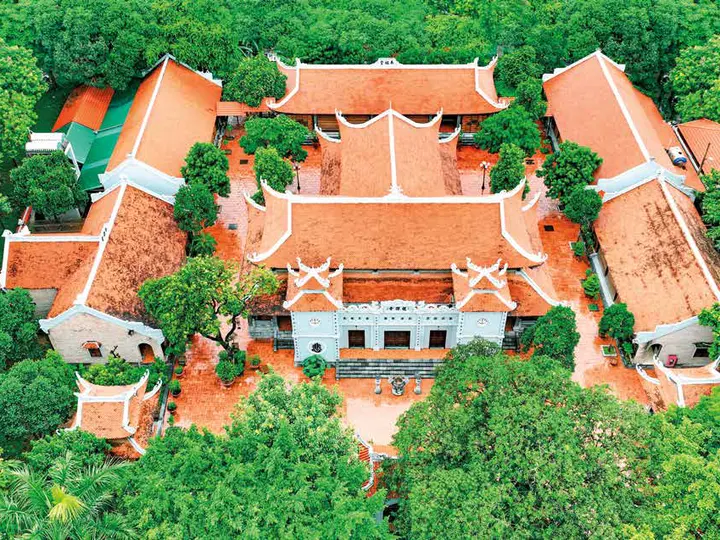 34. Linh Đường TempleLiên Đàm TempleHoàng Mai Ward · Heritage status not stated in the bookLinh Đường Temple (Liên Đàm) was built on a lotus pond, founded by academician Trần Ngọc Điền according to its stele; it was fully restored after the 2008 flood, finishing in late 2018.
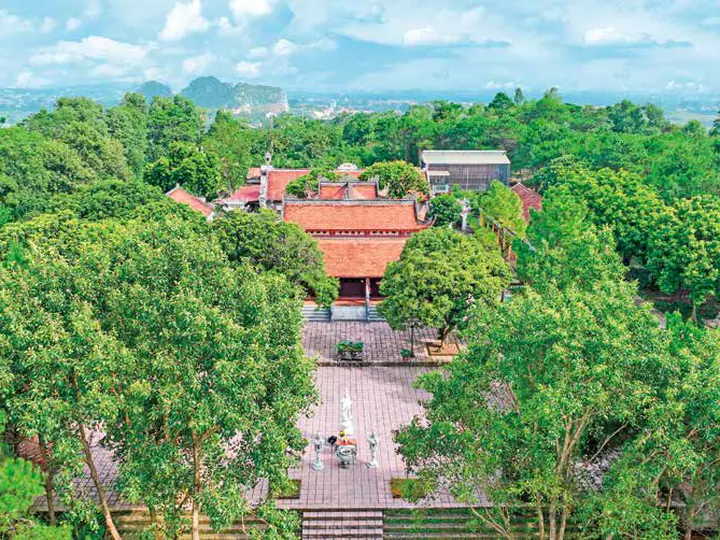 35. Linh Thông TempleChương Mỹ Ward · Heritage status not stated in the bookLinh Thông Temple on Phượng Hoàng Mountain, also called Cao Ninh, was founded by Zen Master Ngộ Ấn of the Vô Ngôn Thông line in the late 11th century and has been rebuilt since 2006.
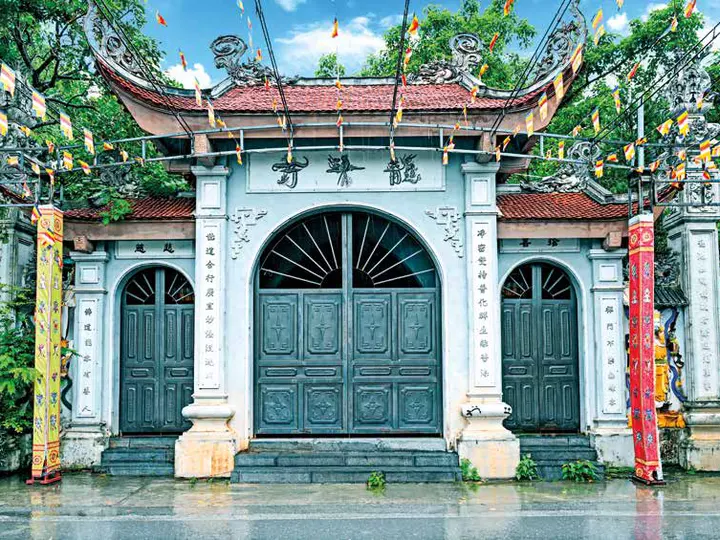 36. Long Đẩu TempleQuốc Oai Commune · Special National Heritage SiteLong Đẩu Temple lies at the foot of Long Đẩu Mountain beside Long Trì Lake in the Thầy Temple complex; major restorations came in the Trần and Trịnh eras and in 2008, with a stele from 1304.
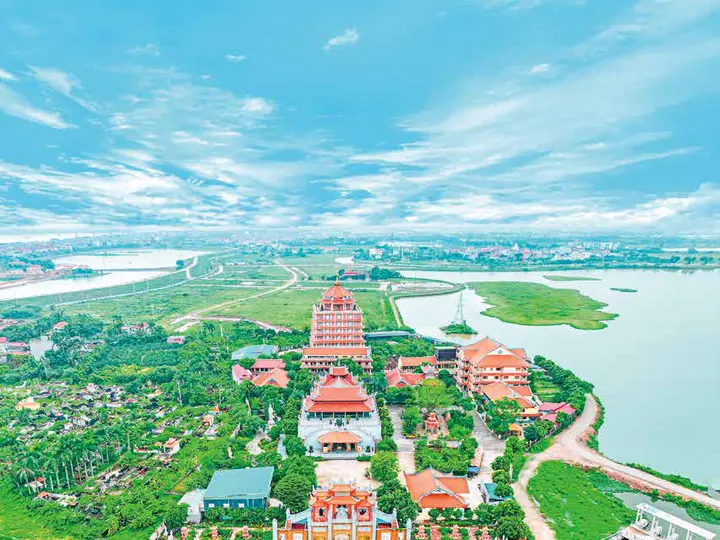 37. Long Hưng TempleVĩnh Thanh Commune · Heritage status not stated in the bookThe temple stands on a high mound encircled by the Thiếp River, a ‘dragon coiling around a jewel’ site that gave it the name Long Hưng. Rebuilt on over 35,000 m², it hosts an international Buddhist translation centre.
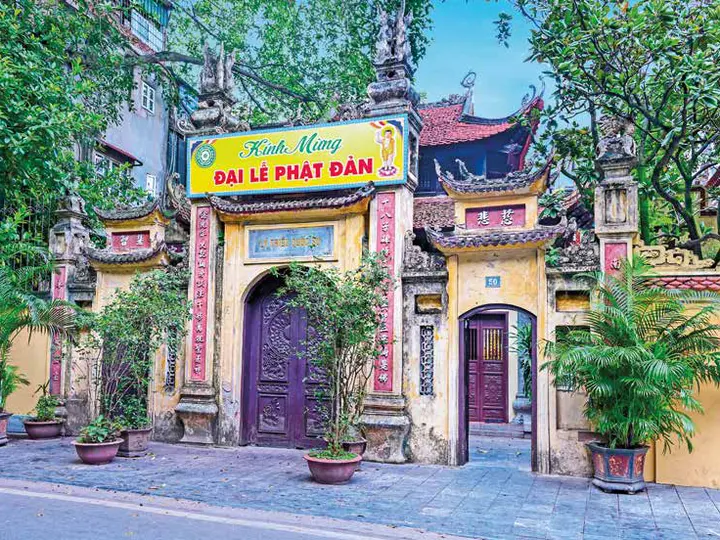 38. Lý Triều Quốc Sư TempleHoàn Kiếm Ward · National Heritage SiteThe temple began as Tiên Thị Shrine honouring National Master Minh Không, on the site of the house King Lý Thần Tông had built for him in 1131. It keeps stone portrait statues carved in 1674 and many restoration steles.
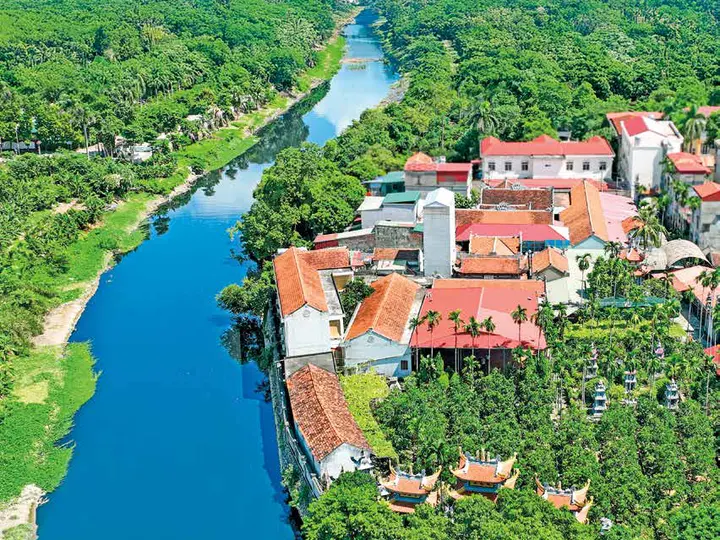 39. Mậu Lương Thượng TempleĐại Khánh TempleKiến Hưng Ward · Heritage status not stated in the bookMậu Lương Thượng Temple, also called Đại Khánh Zen Temple, keeps a Cảnh Thịnh 6 (1798) bell and 13 steles reflecting the village custom of memorial offerings shared between the communal house and the temple.
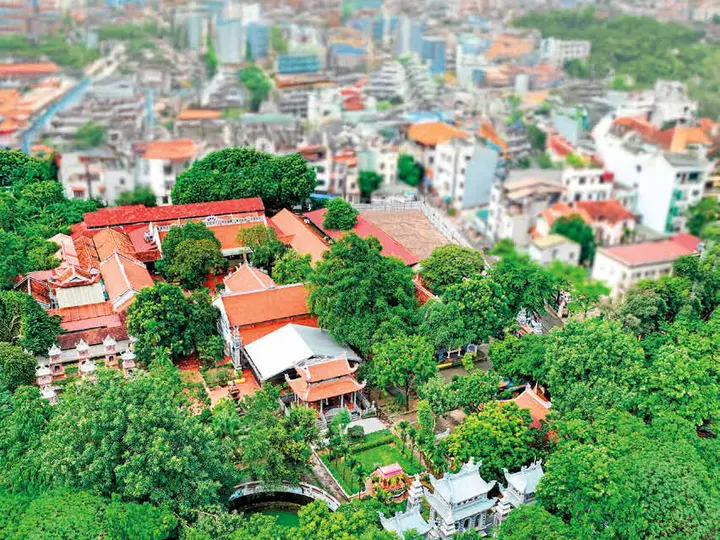 40. Mễ Trì Thượng TempleThiên Trúc TempleTừ Liêm Ward · National Heritage SiteMễ Trì Thượng Temple, or Thiên Trúc Temple, is also called the Crow Patriarch Temple after the monk Quang Lư who trained a flock of crows. It housed an artillery signal station and was bombed by B-52s in 1972.
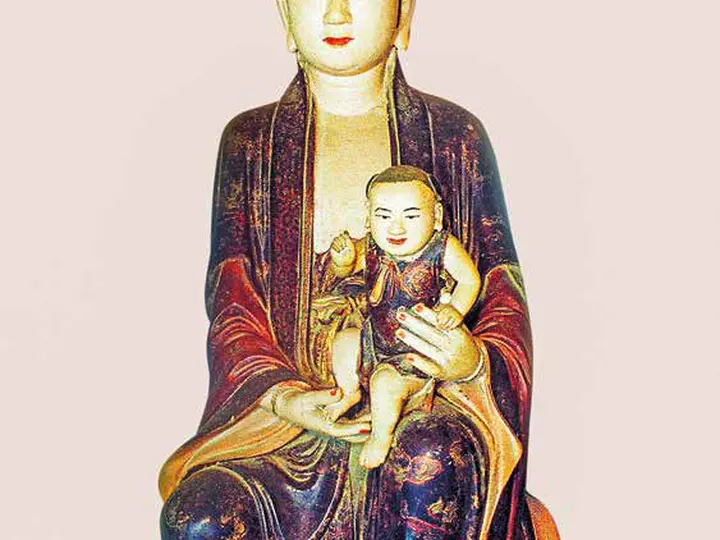 41. Mía TempleSùng Nghiêm TempleSơn Tây Ward · National Heritage SiteMía Temple is tied to Lady Nguyễn Thị Ngọc Liệu, a consort of Lord Trịnh Tráng, who raised funds for the great 1632 restoration. It holds 6 bronze, 107 terracotta and 174 wooden statues, mostly of the 17th–18th centuries.
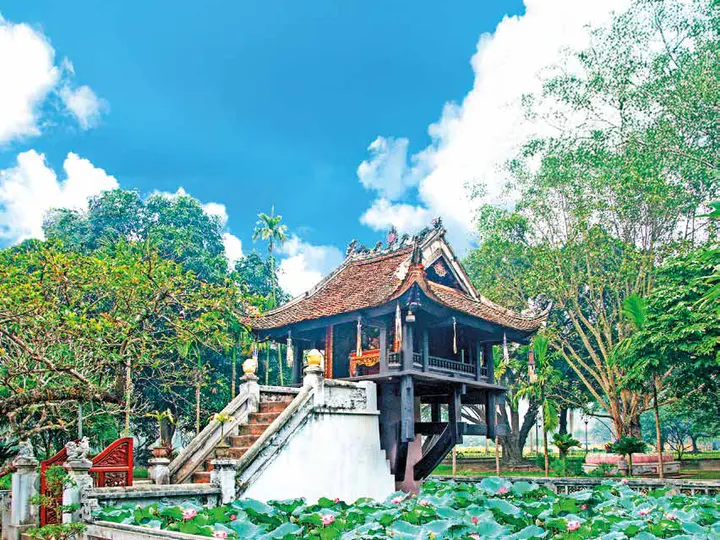 42. Một Cột TempleDiên Hựu TempleBa Đình Ward · National Heritage SiteOne Pillar Temple, also called Liên Hoa Đài, stands on a single pillar in a square pond like a lotus rising from the water. Linked to the Lý kings, it was mined by the French in 1954 and rebuilt in 1955.
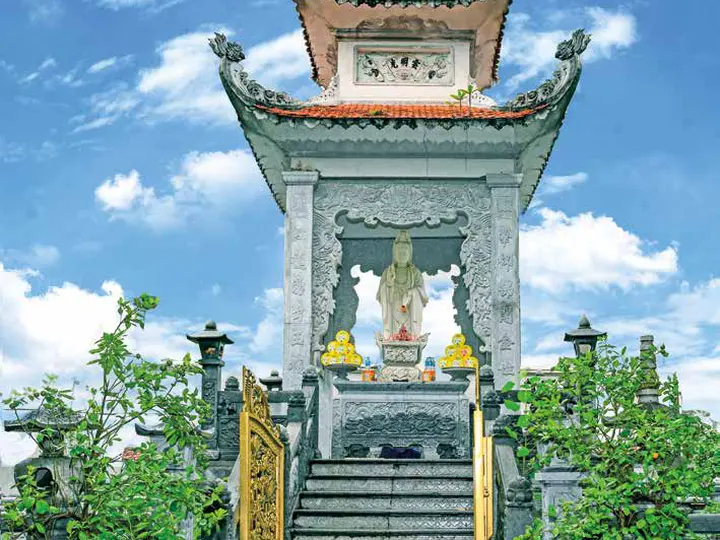 43. Nam Đồng TempleCàn An TempleKim Liên Ward · National Heritage SiteNam Đồng Temple, or Càn An Temple, is said to date from 1141 and was rebuilt from 1612 by Supreme Monk Nguyễn Nhân. In 1736 Zen Master Tính Tuyền brought over 300 sets of scriptures from China to the temple.
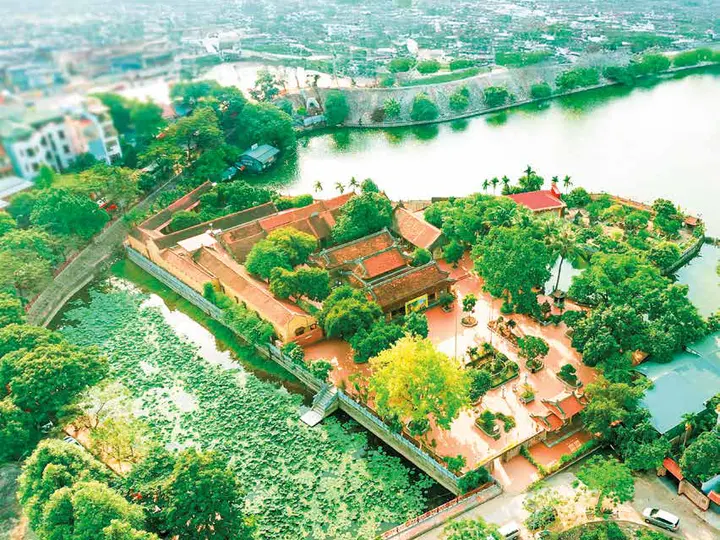 44. Nghi Tàm TempleKim Liên TempleTây Hồ Ward · National Heritage SiteNghi Tàm Temple, or Kim Liên Temple, stands by West Lake on the site of the Lý-era Từ Hoa Palace. It preserves Tây Sơn architecture, with three halls in a ‘Tam’ layout and a Three-Gate Hall described as unique in Vietnam.
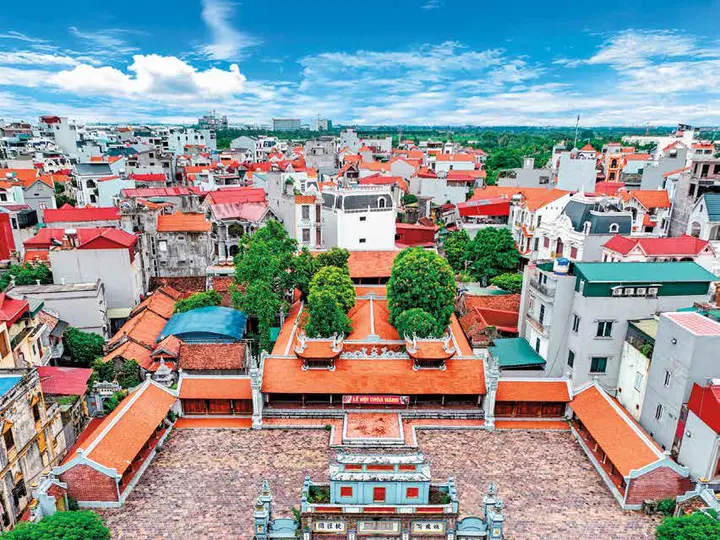 45. Ninh Hiệp TempleĐại Thiền Temple - Pháp Vân TemplePhù Đổng Commune · National Heritage SiteNinh Hiệp Temple, also called Nành Temple, worships Pháp Vân and has an inner-and-outer enclosed layout of the ‘hundred-room’ type. It is a sculpture museum of the 16th–18th centuries and was once a Party base.
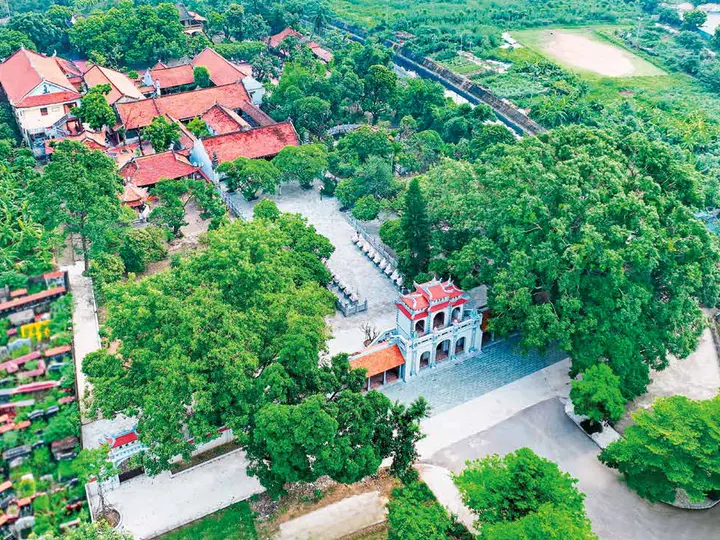 46. Quang Ân TempleThanh Liệt Ward · National Heritage SiteQuang Ân Temple, also known as Quang Nội, began as a small thatched hermitage and was rebuilt in 1704 by Zen Master Như Liên. It is linked to Venerable Trí Giác and Patriarch Thích Thanh Hanh of Vĩnh Nghiêm, a local native.
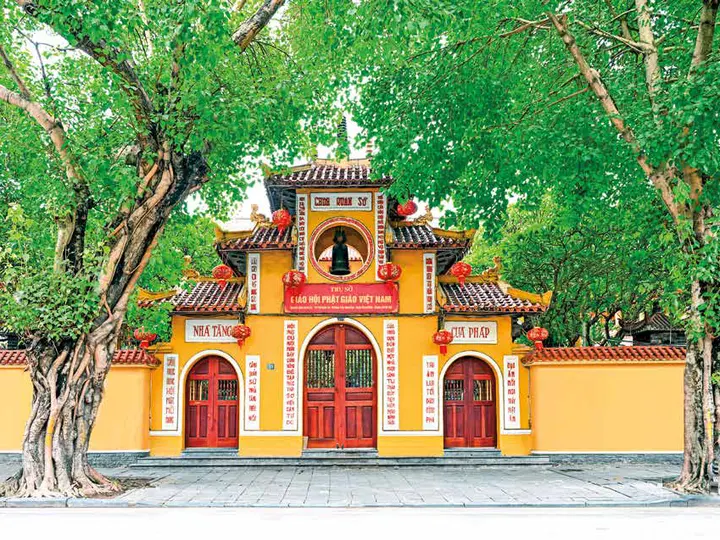 47. Quán Sứ TempleCửa Nam Ward · Heritage status not stated in the bookQuán Sứ Temple was built for envoys of Buddhist states to worship and is now the headquarters of the Vietnam Buddhist Sangha. It was rebuilt on a large scale in 1938–1942 in the ‘inner-and-outer enclosed’ layout.
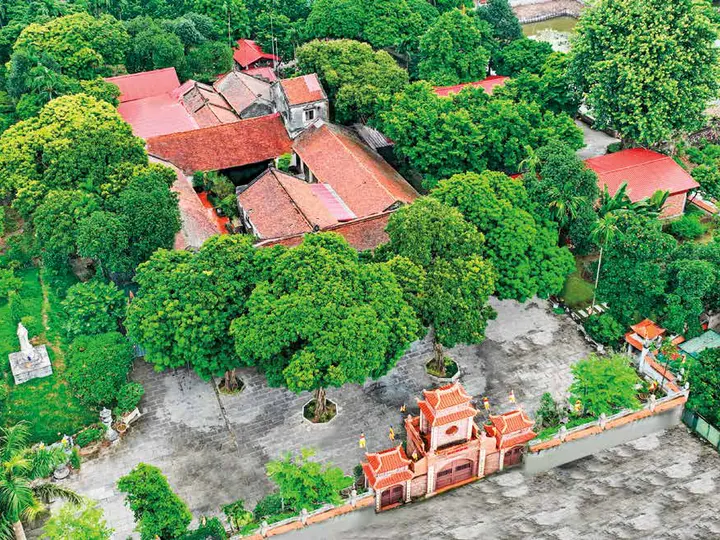 48. Quảng Bá TempleHoằng Ân TempleTây Hồ Ward · National Heritage SiteQuảng Bá Temple, or Hoằng Ân Temple, is a major ancestral temple by West Lake, traditionally tied to Zen Master Ngộ Ấn of the Lý era. It has a distinctive Cửu Long hall, over 30 steles and ancient woodblocks.
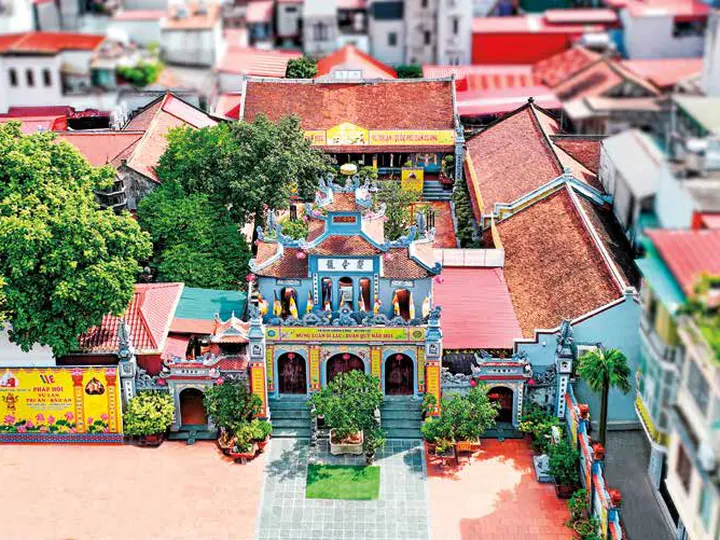 49. Quỳnh Lôi TempleKhánh Long TempleBạch Mai Ward · National Heritage SiteQuỳnh Lôi Temple, or Khánh Long Temple, is said to date from the Trần and was greatly restored in the early 17th century, per a stele composed by Phùng Khắc Khoan. It also served as a revolutionary base.
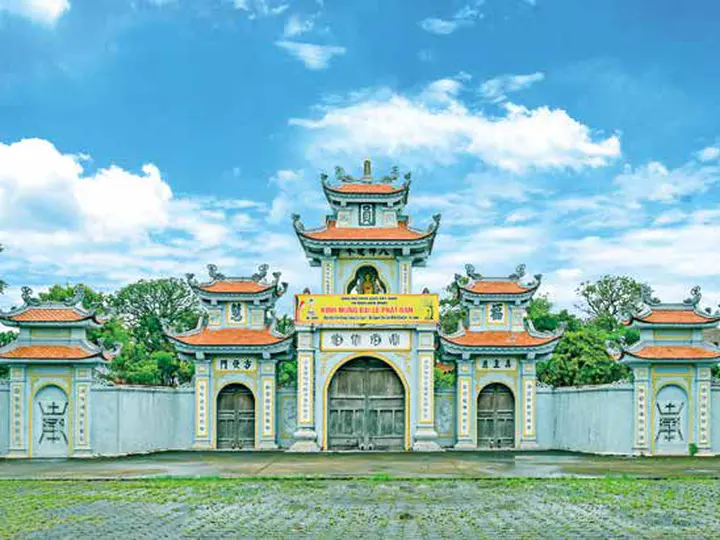 50. Ráng TempleViên Minh TempleĐại Xuyên Commune · Heritage status not stated in the bookRáng Temple, or Viên Minh Temple, was moved to its present site in 1902 by Master Thích Nguyên Uẩn, who founded the Viên Minh Dharma Assembly. It is closely associated with the Third Supreme Patriarch Thích Phổ Tuệ.
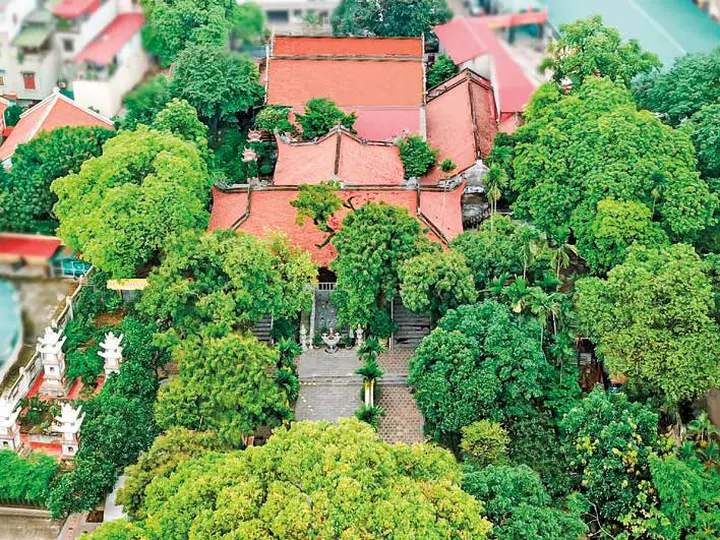 51. Sải TempleTĩnh Lâu TempleTây Hồ Ward · National Heritage SiteSải Temple, or Tĩnh Lâu Temple, was called Thanh Lâu in the Lê era and faces West Lake. It has a rare canopy-shaped Cửu Long hall, a Thanh Lâu bell of 1799 and 15 steles.
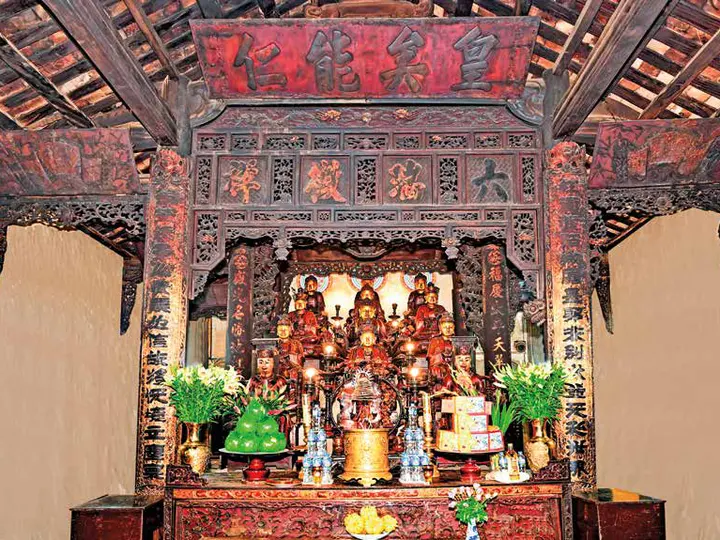 52. Sở TemplePhúc Khánh TempleĐống Đa Ward · National Heritage SiteSở Temple, or Phúc Khánh Zen Temple, was ruined in the 1789 Đống Đa battle and restored with help from Tây Sơn Admiral Trần Văn Phong. It has a bronze Nine Dragons ensemble from the Tây Sơn era and trained monks.
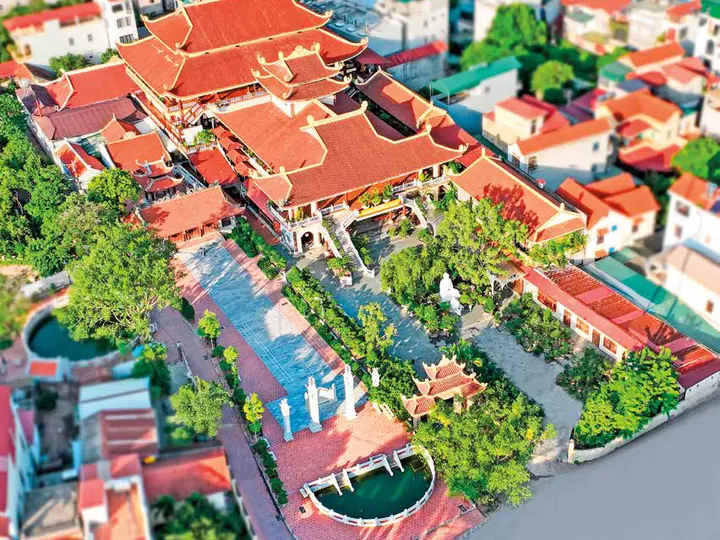 53. Sùng Phúc MonasteryLong Biên Ward · Heritage status not stated in the bookSùng Phúc Monastery stands on the site of an old Xuân Đỗ Thượng village temple and now follows the Trúc Lâm Zen school revived by Venerable Thích Thanh Từ, who named it in 2005. Main works were completed that year.
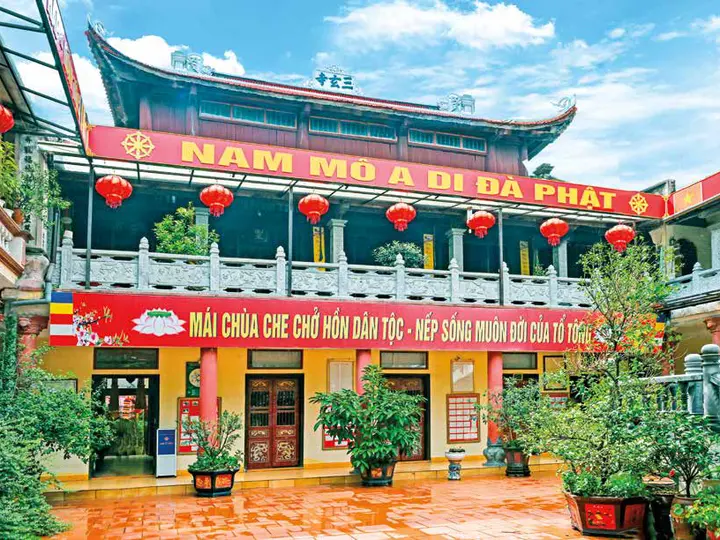 54. Tam Huyền TempleSùng Phúc TempleKhương Đình Ward · National Heritage SiteTam Huyền Temple, or Sùng Phúc Temple, holds the tomb and shrine of Từ Vinh, father of Zen Master Từ Đạo Hạnh. It is an ancestral temple of the Lâm Tế line tied to Tính Tuyền - Trạm Trạm, later led by abbesses.
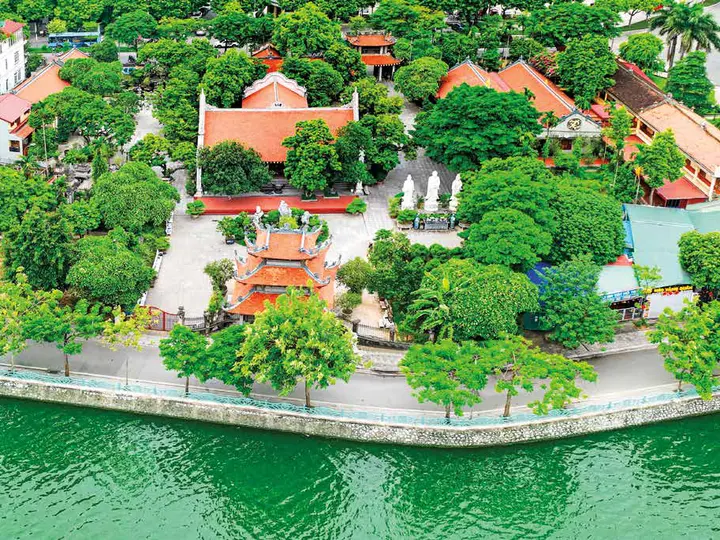 55. Tào Sách TempleLinh Sơn TempleTây Hồ Ward · National Heritage SiteAn old temple on the shore of West Lake, built on the site of the thatched study of Prince Linh Lang of the Trần dynasty. It was a centre of the Tào Động school in Thăng Long; its Main Hall burned in 2011 and was rebuilt.
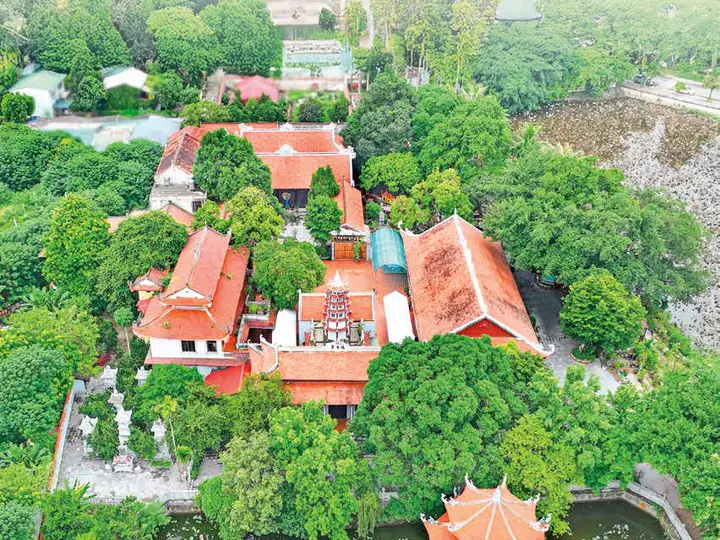 56. Tây Hồ TemplePhổ Linh Temple - Địa Linh TempleTây Hồ Ward · Heritage status not stated in the bookThe temple bears two names, Phổ Linh and Địa Linh, and is said to have been founded in 1079. It keeps eight steles, a Cảnh Thịnh bronze bell, and a pagoda garden of eight stupas built in 2014.
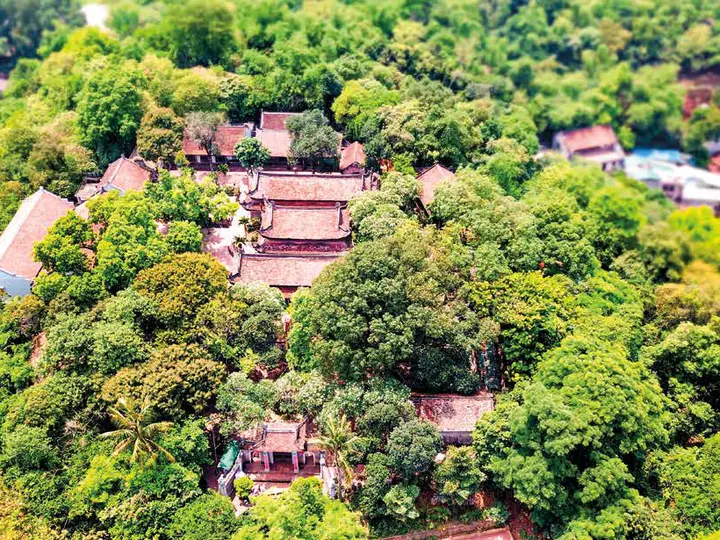 57. Tây Phương TempleSùng Phúc TempleThạch Xá Commune · Special National Heritage SiteThe temple on Tây Phương Mountain is known for about 80 jackfruit-wood statues, including the set of eighteen arhats regarded as a masterpiece. Its origin is uncertain; a major restoration took place in 1794.
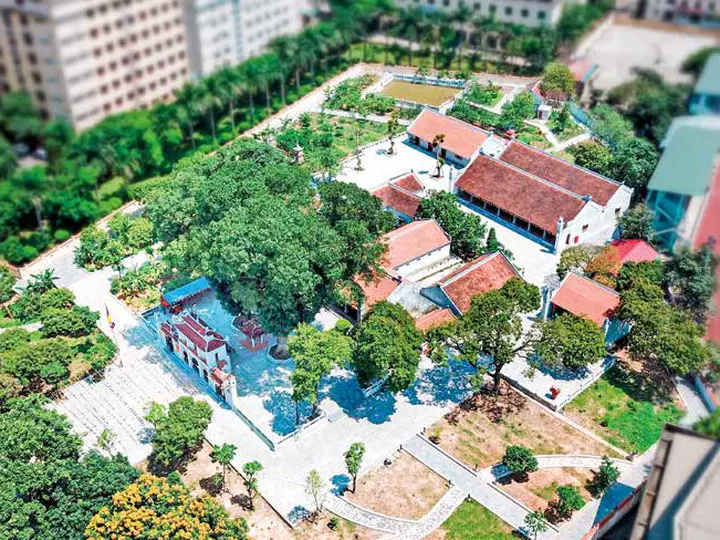 58. Thánh Chúa TempleCầu Giấy Ward · National Heritage SiteThe temple is tied to several Lý and Lê emperors: Lý Thái Tông took refuge here in 1028 and Lý Thánh Tông prayed for an heir. Its Upper Hall stands higher than the Front Hall, a Lý–Trần feature.
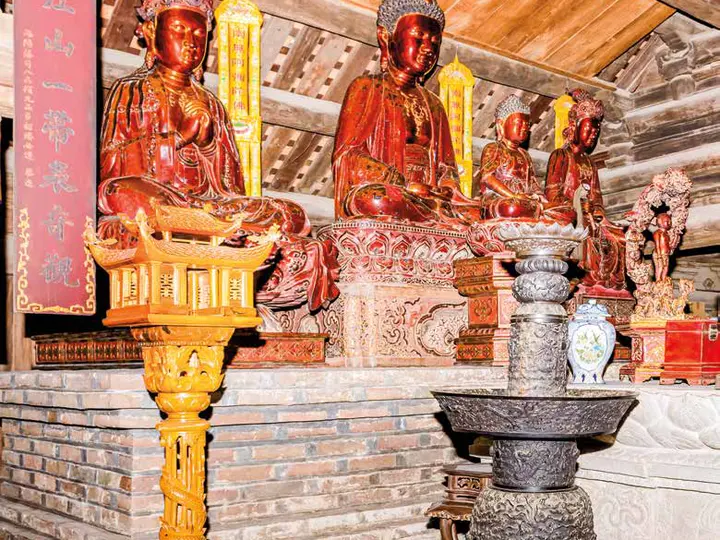 59. Thầy TempleThiên Phúc TempleQuốc Oai Commune · Special National Heritage SiteThe main temple of the Sài Sơn complex, tied to Zen Master Từ Đạo Hạnh and built in the “Buddha in front, Saint behind” plan. It is known for its festival and water puppetry at the Water Pavilion on Long Trì Lake.
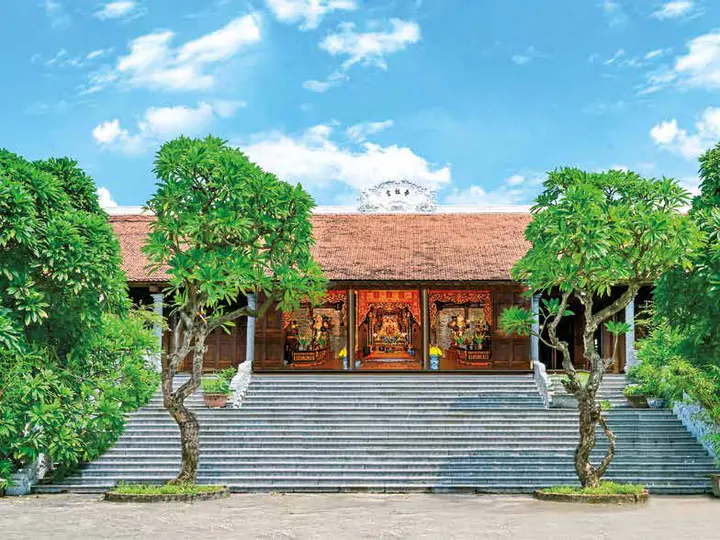 60. Thiên Tuế TempleQuán Không TempleSóc Sơn Commune · Heritage status not stated in the bookAn ancient scenic temple in Phù Lỗ, said to have been headed by Zen Master Quán Không in the Trần period, hence the name Quán Không. A 1654 stele, a 1707 stone incense pillar and a 1793 bell record its restorations.
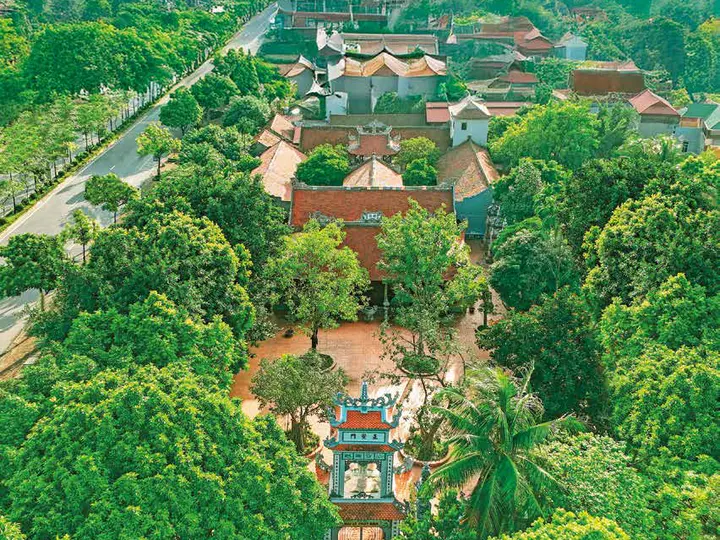 61. Thụy Ứng TempleSùng Phúc TempleĐan Phượng Commune · City-level Heritage SiteAn ancient temple of the Tào Động Zen school, granted royal decrees in the Later Lê period. During the two resistance wars it served as a secret revolutionary base, with a hideout beneath the Guardian statue.
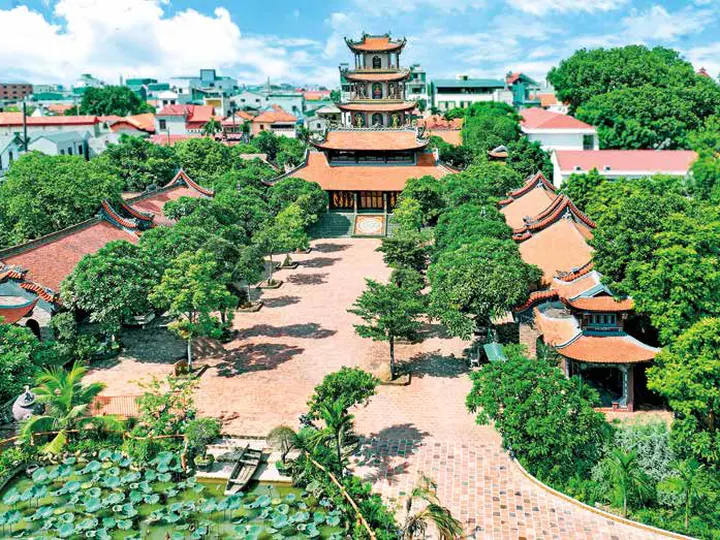 62. Tiêu Dao TempleBát Tràng Commune · Heritage status not stated in the bookAn old temple tied to the founding of Bát Tràng pottery village, once a base of the Bãi Sậy insurgents and a drop point for secret documents before the August Revolution. It was rebuilt from 2001 on its old site.
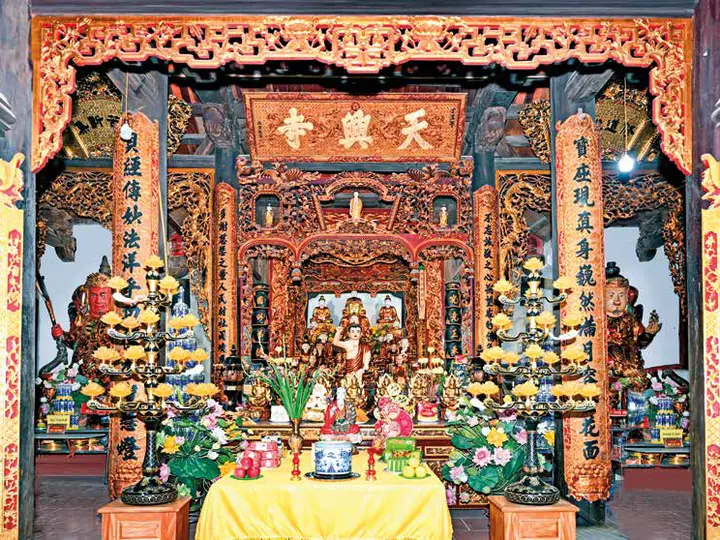 63. Tổng TempleThiên Hưng TempleAn Khánh Commune · National Heritage SiteThiên Hưng Temple, the main religious centre of the former Yên Lũng canton, was founded in 988 by Zen master Chân Từ. It venerates the Three Saints Không Lộ, Giác Hải and Từ Đạo Hạnh, and was ruined in 1947.
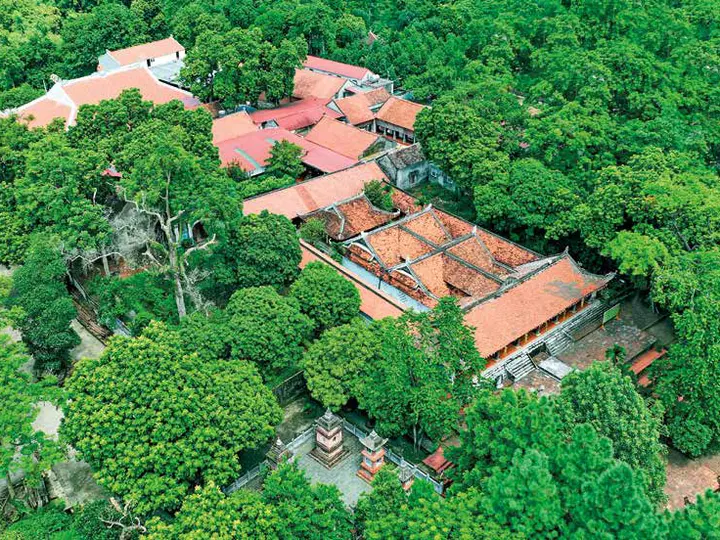 64. Trăm Gian TempleQuảng Nghiêm TempleChương Mỹ Ward · National Heritage SiteQuảng Nghiêm Temple keeps over 150 statues, 17 steles and a Trần-style terracotta pedestal. Associated with Venerable Bình An, who founded it, it was among the first 62 national heritage sites ranked in 1962.
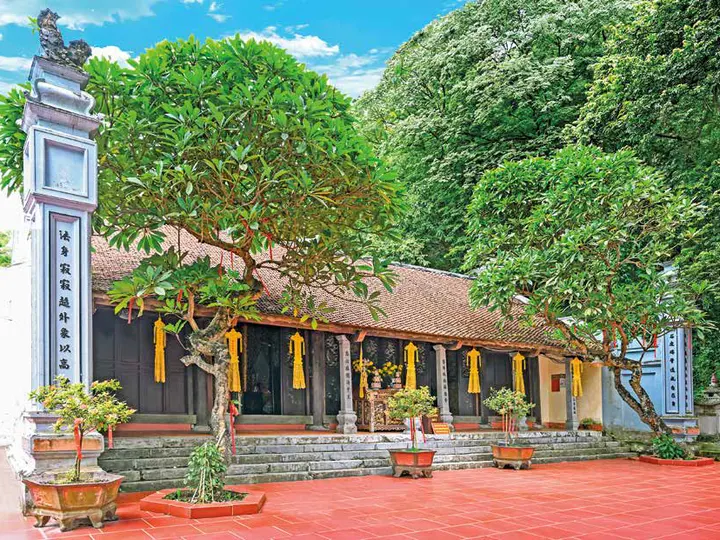 65. Trầm TempleLong Tiên TempleChương Mỹ Ward · National Heritage SiteThe temple lies within Long Tiên Cave, with 48 Lê–Trịnh stone statues and two Main Halls, one in the temple and one in the cave. In 1946 the Voice of Vietnam broadcast the call for national resistance from here.
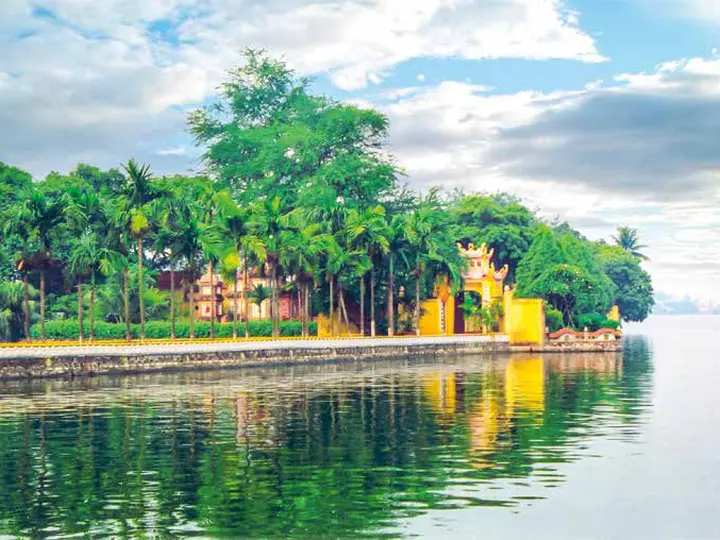 66. Trấn Quốc TempleTrấn Bắc TempleTây Hồ Ward · National Heritage SiteOne of the oldest temples of Thăng Long, founded in the Lý Nam Đế era and moved to the Golden Fish islet in 1615. It has borne several names and hosted eminent monks of many Zen schools.
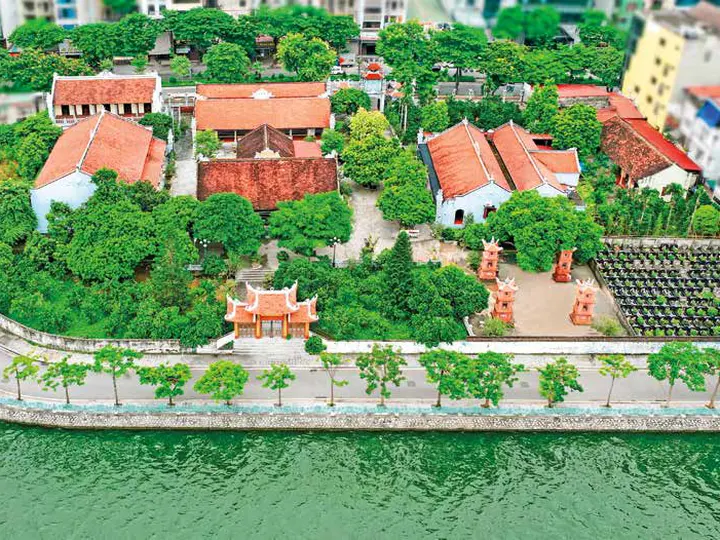 67. Trích Sài TempleThiên Niên TempleTây Hồ Ward · National Heritage SiteThiên Niên Temple is tied to the Thiên Niên estate set up after 1471 for the consorts of King Trà Toàn, and to the legend of two princesses who built an eight-pagoda altar to destroy a nine-tailed fox, hence its name Bát Tháp.
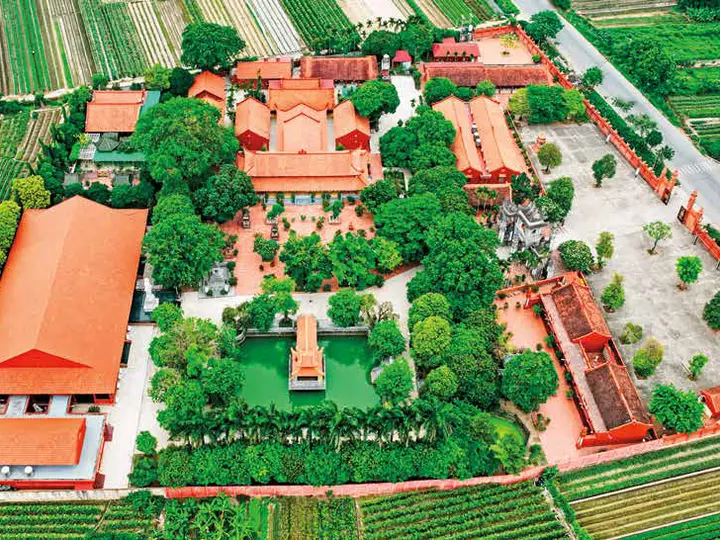 68. Trung Hậu TempleTây Thiên TempleMê Linh Commune · Heritage status not stated in the bookThe ancestral temple of Trung Hậu grew from the hermitage of Patriarch Phổ Vọng and keeps a bell cast in 1625. Venerable Thích Trừng Thanh, abbot from 1901, was a leading figure of the Buddhist revival in the north.
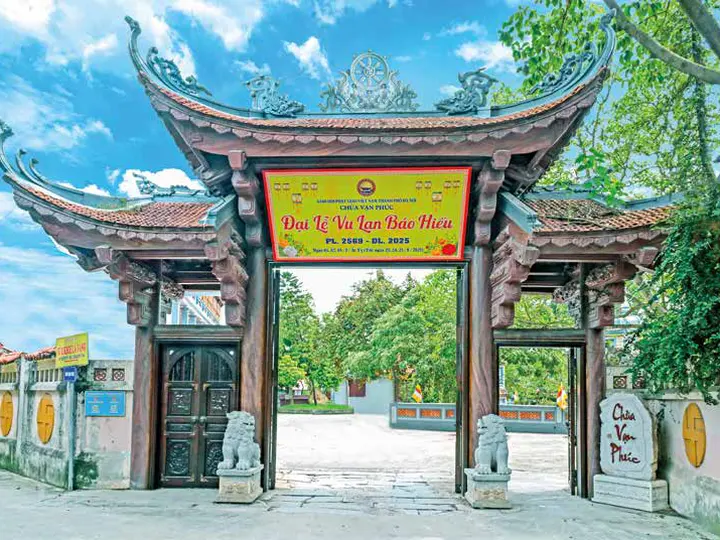 69. Vạn Phúc TempleSóc Sơn Commune · Heritage status not stated in the bookThe temple where the scholar Ngô Thì Nhậm, known as Zen Master Hải Lượng, lived in retreat in the late 18th century and had a bell cast in 1798. It fell into ruin and has been rebuilt since 1997.
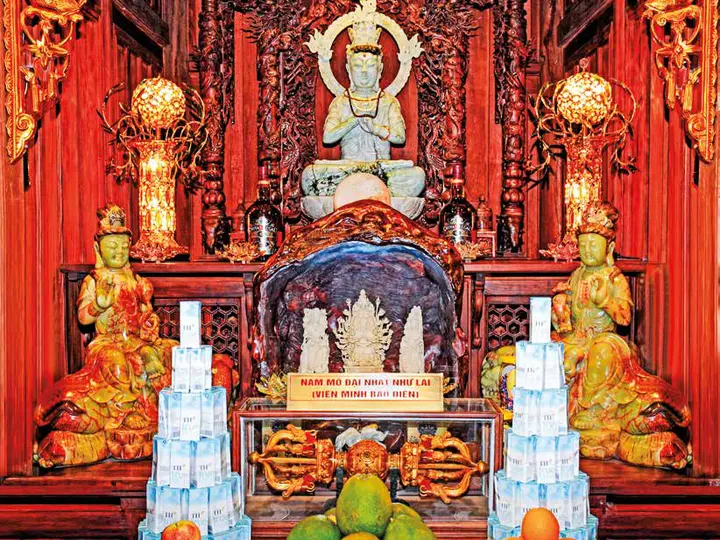 70. Vệ Hồ TempleVạn Niên TempleTây Hồ Ward · National Heritage SiteVạn Niên Temple was originally Vạn Tuế Temple, built in 1011 by Emperor Lý Thái Tổ after moving the capital. Zen masters Lâm Huệ Sinh, Thảo Đường and Biện Tài served here; it holds a 600 kg jadeite Buddha.
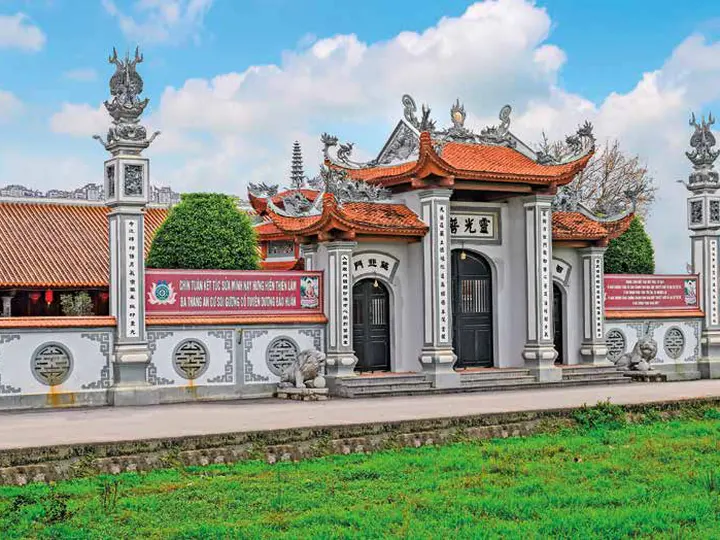 71. Võ Lăng TempleLinh Quang TempleDân Hòa Commune · Heritage status not stated in the bookLinh Quang Temple stands in a Buddha-statue carving village; legend says Đoàn Thượng restored it and gave it its name around 1210. The 1834–1840 restoration shaped today's Main Hall; it houses Thanh Oai district's Buddhist office.
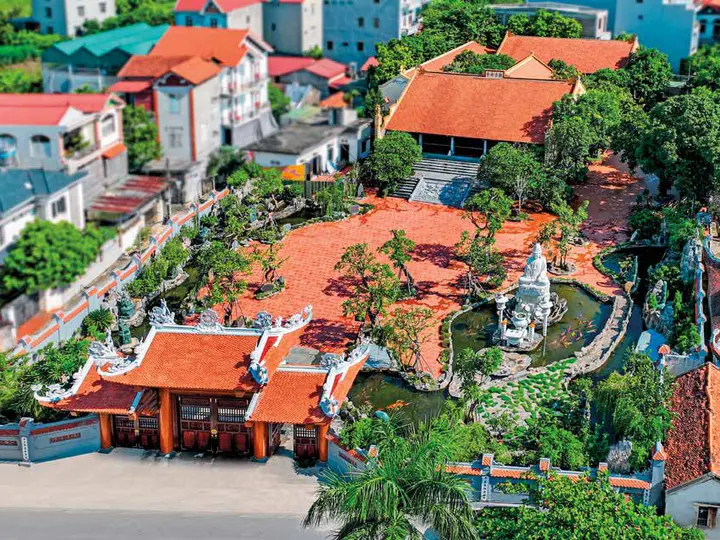 72. Xuân Canh TempleQuan Âm TempleĐông Anh Commune · National Heritage SiteQuan Âm Temple in Thượng Lão hamlet was described by a 1680 stele as the foremost scenic temple of Kinh Bắc. It keeps 11 steles and an 1839 bell, and was restored for the Thăng Long millennium.