Chapter 30 of 72 in Hà Nội: Renowned Historic Buddhist Temples · pages 312–320
Kim Mã Temple
Kim Sơn Altar Temple
Chùa Kim Mã
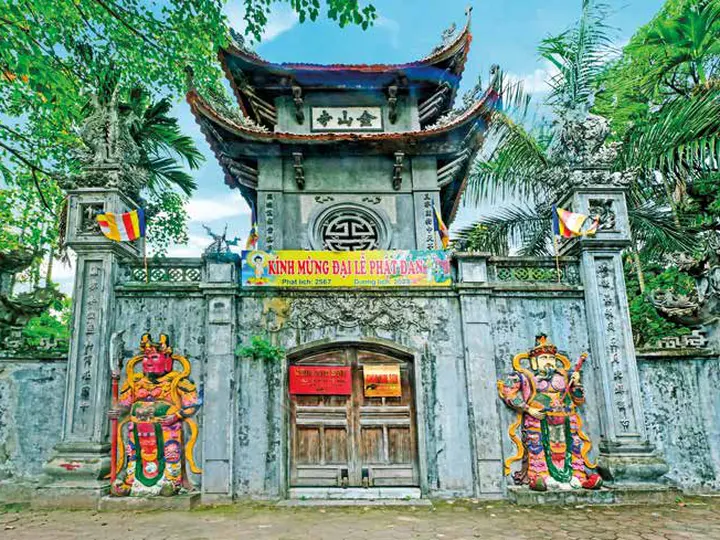
Kim Mã Temple (Kim Sơn) stands on a former execution ground and cemetery, with the Vạn Linh altar and a three-unit layout forming the character Sơn, rare among Vietnamese temples.
Key facts
- Address
- Giảng Võ Ward · Open in Google Maps
- Founded
- Old shrine from the Lý era; became a temple in 1881
- Heritage status
- National Historical and Cultural Heritage Site (1985)
- Book pages
- 312–320
Highlights
- Three Đinh-shaped units combine into the character Sơn, a rare layout
- Vạn Linh altar for fallen Tây Sơn and other soldiers
- Gilded-on-silver openwork screens and stone columns in the front hall
Milestones
- 1789 After the victory, fallen Tây Sơn soldiers are buried here
- 1881 Shrine collapsed by storm is rebuilt and named Tào Mã Temple
- 1898 Restored and renamed Kim Sơn; over 3,000 sets of remains gathered
- 1932 Three Jewels Hall, Mother shrine and altar separated as today
- 1967 Statues from bombed Linh Sơn Temple are moved to the Vạn Linh altar
- 1985 Ranked a national historical and cultural heritage site
From the book
Kim Mã Temple, formally known as Kim Sơn Temple, is located in Giảng Võ Ward, Hà Nội. In earlier times, this area belonged to Kim Mã Hamlet, Vĩnh Thuận District, and later to Kim Mã Hamlet, Hoàn Long District, Hà Đông Province.
Frequently asked questions
Where is Kim Mã Temple?
Kim Mã Temple is located at Giảng Võ Ward, Hà Nội, Vietnam.
When was Kim Mã Temple founded?
Old shrine from the Lý era; became a temple in 1881
Is Kim Mã Temple a ranked heritage site?
National Historical and Cultural Heritage Site (1985)
What is the formal name of Kim Mã Temple?
Its formal (literary) name is Kim Sơn Altar Temple.