Chapter 41 of 72 in Hà Nội: Renowned Historic Buddhist Temples · pages 411–417
Mía Temple
Sùng Nghiêm Temple
Chùa Mía
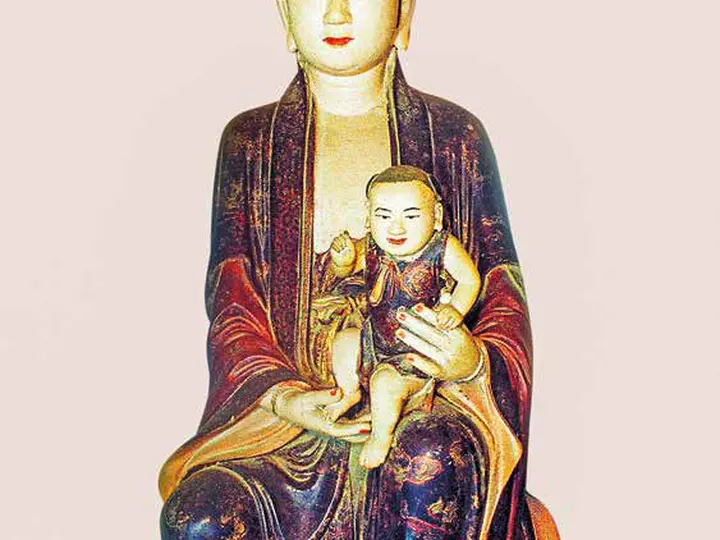
Mía Temple is tied to Lady Nguyễn Thị Ngọc Liệu, a consort of Lord Trịnh Tráng, who raised funds for the great 1632 restoration. It holds 6 bronze, 107 terracotta and 174 wooden statues, mostly of the 17th–18th centuries.
Key facts
- Address
- Sơn Tây Ward · Open in Google Maps
- Founded
- An old small shrine; earliest stele dated 1620 (according to tradition)
- Heritage status
- Historical and Cultural Site ranked by the Ministry of Culture (13 January 1964)
- Book pages
- 411–417
Highlights
- Lady ‘Bà Chúa Mía’ raised funds for the 1632 restoration
- 6 bronze, 107 terracotta and 174 wooden statues
- Master Thích Trí Độ evacuated here and taught Buddhism
Milestones
- 1620 Sùng Nghiêm tự thị bi, the temple’s earliest stele, erected
- 1632 Lady Nguyễn Thị Ngọc Liệu raised funds for a major restoration
- 1750 Duke Đinh Văn Quế funded the enlargement of the front hall
- 1797 Bronze bell cast; leftover funds built a brick stupa
- 1873 Sùng Nghiêm tự bell cast
- 1964 Ranked a Historical and Cultural Site by the Ministry of Culture
From the book
Mía Temple, formally known as Sùng Nghiêm Temple, is located in Sơn Tây Ward, Hà Nội. In earlier times, this place belonged to the land of Đường Lâm, Cam Giá Canton. Its vernacular name was Mía, and thus local people came to know it as Mía (literally, Sugarcane Temple) Temple.
Frequently asked questions
Where is Mía Temple?
Mía Temple is located at Sơn Tây Ward, Hà Nội, Vietnam.
When was Mía Temple founded?
An old small shrine; earliest stele dated 1620 (according to tradition)
Is Mía Temple a ranked heritage site?
Historical and Cultural Site ranked by the Ministry of Culture (13 January 1964)
What is the formal name of Mía Temple?
Its formal (literary) name is Sùng Nghiêm Temple.