Chapter 38 of 72 in Hà Nội: Renowned Historic Buddhist Temples · pages 382–393
Lý Triều Quốc Sư Temple
Chùa Lý Triều Quốc Sư
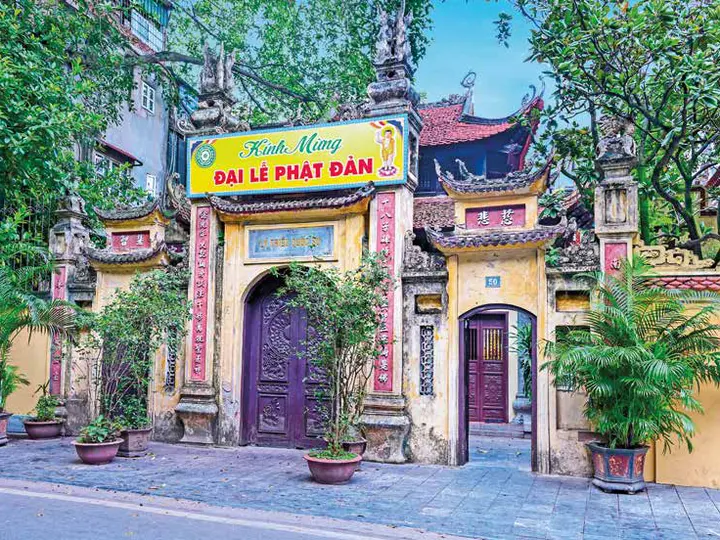
The temple began as Tiên Thị Shrine honouring National Master Minh Không, on the site of the house King Lý Thần Tông had built for him in 1131. It keeps stone portrait statues carved in 1674 and many restoration steles.
Key facts
- Address
- 50 Lý Quốc Sư Street, Hoàn Kiếm Ward · Open in Google Maps
- Founded
- Tiên Thị Shrine built in the Lý era, after 1141
- Heritage status
- Historical and Cultural Site recognised by the Ministry of Culture and Information (1995)
- Lineage
- Tào Động (Caodong)
- Book pages
- 382–393
Highlights
- Stone portrait statues carved in 1674
- Stele recording the 1855 restoration of Tiên Thị
- Keeps the Đại bảo tích and Hoa nghiêm sutra sets
Milestones
- 1131 King Lý Thần Tông had a house built for National Master Minh Không
- 1674 Major Later Lê repair; stone portrait statues carved
- 1855 Major restoration; shrine turned back to face east and enlarged
- 1930 Venerable Thích Thanh Định converted the shrine into Lý Triều Quốc Sư Temple
- 1954 Rebuilt after heavy destruction in the 1946 fighting
- 2000 Restored Great Hall inaugurated
From the book
Lý Triều Quốc Sư Temple is located at 50 Lý Quốc Sư Street, Hoàn Kiếm Ward, Hà Nội. This site was originally part of Tiên Thị Village, Tiên Túc Canton, Thọ Xương District, and was known as Lý Quốc Sư Temple or Tiên Thị Shrine.
Frequently asked questions
Where is Lý Triều Quốc Sư Temple?
Lý Triều Quốc Sư Temple is located at 50 Lý Quốc Sư Street, Hoàn Kiếm Ward, Hà Nội, Vietnam.
When was Lý Triều Quốc Sư Temple founded?
Tiên Thị Shrine built in the Lý era, after 1141
Is Lý Triều Quốc Sư Temple a ranked heritage site?
Historical and Cultural Site recognised by the Ministry of Culture and Information (1995)
Which Zen lineage is Lý Triều Quốc Sư Temple associated with?
According to the book, the temple is associated with the Tào Động (Caodong) tradition.