Chapter 46 of 72 in Hà Nội: Renowned Historic Buddhist Temples · pages 460–469
Quang Ân Temple
Chùa Quang Ân
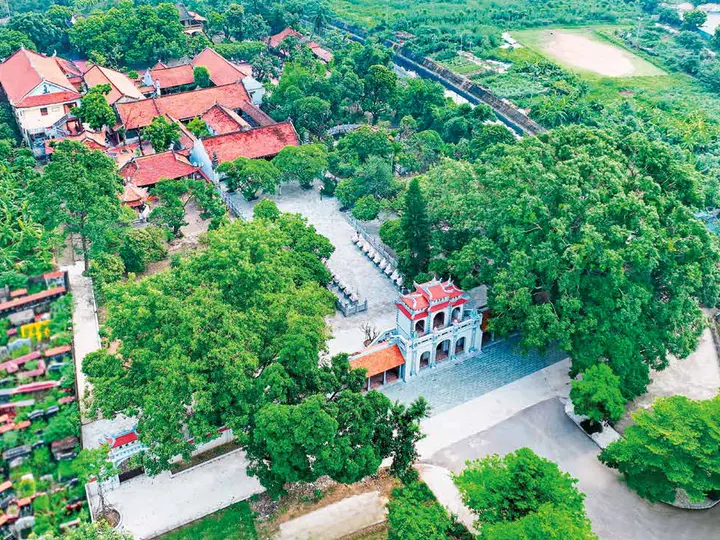
Quang Ân Temple, also known as Quang Nội, began as a small thatched hermitage and was rebuilt in 1704 by Zen Master Như Liên. It is linked to Venerable Trí Giác and Patriarch Thích Thanh Hanh of Vĩnh Nghiêm, a local native.
Key facts
- Address
- Thanh Liệt Ward · Open in Google Maps
- Founded
- A 1942 stele gives 1694; possibly before 1688 (according to tradition)
- Heritage status
- National-level Historical and Cultural Site (1995)
- Lineage
- Lâm Tế (Linji)
- Book pages
- 460–469
Highlights
- Stone incense pillar erected in 1704
- Patriarch Thích Thanh Hanh became abbot in 1913
- Large bell cast in Minh Mệnh 7 (1826)
Milestones
- 1688 Hậu kỵ bi ký stele mentions the village restoring the temple
- 1694 Founding date per the 1942 stele, initially thatched huts
- 1704 Zen Master Như Liên rebuilt the temple and raised a stone incense pillar
- 1747 Major restoration led by Zen Master Như Tâm, Venerable Trí Giác
- 1913 Patriarch Thích Thanh Hanh invited; temple reoriented
- 1988 Villagers raised funds to repair the decayed temple
From the book
The temple was established on a spacious site regarded in traditional geomancy as a “dragon returning to its ancestral source” (the dragon vein is believed to run from Tổ Long - Ba Vì Mountain - to the temple, where it comes to rest, with its head facing Ba Vì). This is considered a “blessing-gathering” site in Thanh Liệt Ward, Hà Nội.
Frequently asked questions
Where is Quang Ân Temple?
Quang Ân Temple is located at Thanh Liệt Ward, Hà Nội, Vietnam.
When was Quang Ân Temple founded?
A 1942 stele gives 1694; possibly before 1688 (according to tradition)
Is Quang Ân Temple a ranked heritage site?
National-level Historical and Cultural Site (1995)
Which Zen lineage is Quang Ân Temple associated with?
According to the book, the temple is associated with the Lâm Tế (Linji) tradition.