Chapter 28 of 72 in Hà Nội: Renowned Historic Buddhist Temples · pages 294–301
Khoan Tế Temple
Cự Đà Temple
Chùa Khoan Tế
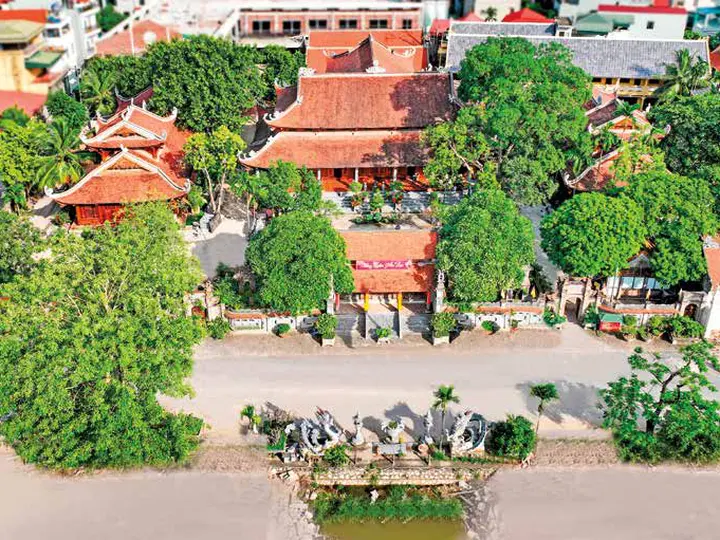
Khoan Tế Temple (Cự Đà) dates from the Lý-Trần period by legend, with its oldest stele from 1634; its Three Jewels Hall burned in 2020 and was promptly rebuilt.
Key facts
- Address
- Khoan Tế Hamlet, Bát Tràng Commune (approximate location) · Show on the map
- Founded
- By legend, dating from the Lý-Trần period (according to tradition)
- Heritage status
- National Architectural-Artistic Heritage Site (1996)
- Book pages
- 294–301
Highlights
- Lý-Trần celadon sherds unearthed at the old stupa garden
- 1634 stele records Lady Trịnh Thị Ngọc Yêm's expansion of the temple
- Three steles, two bells, a chime and a Quan Âm statue
Milestones
- 1632 Lady Trịnh Thị Ngọc Yêm builds enclosing walls and buys land to expand
- 1817 Monk Chiếu Viêm and villagers cast a new bell to replace the lost one
- 1907 Nun Đàm Thuận and villagers renovate the main hall, ancestors' hall and gate
- 1996 The culture minister recognizes the temple as a national heritage site
- 2008 State-funded restoration for the Thăng Long millennium celebration
- 2020 Fire destroys the roof and timbers of the Three Jewels Hall
From the book
Khoan Tế Temple, formally known by its literary name Cự Đà Temple, is located in Khoan Tế Village, Bát Tràng Commune, Hà nội. Historically, the area was Khoan Hồng Village, Đa Tốn Commune, Gia Lâm District, Bắc Ninh Province.
Frequently asked questions
Where is Khoan Tế Temple?
Khoan Tế Temple is located at Khoan Tế Hamlet, Bát Tràng Commune, Hà Nội, Vietnam.
When was Khoan Tế Temple founded?
By legend, dating from the Lý-Trần period (according to tradition)
Is Khoan Tế Temple a ranked heritage site?
National Architectural-Artistic Heritage Site (1996)
What is the formal name of Khoan Tế Temple?
Its formal (literary) name is Cự Đà Temple.